
Winter shutdown aims to protect equipment, but the restart is often when compressed air systems fail. As temperatures rise and systems come back online, trapped moisture, oil carryover, and thermal shock can overwhelm dryers, freeze lines, and disrupt pneumatic controls at the worst possible moment. This article explains how proper air treatment and oil-free rental compressors ensure clean, dry, and reliable air during seasonal shutdowns and restarts.
Why Winter Shutdown and Restart Are High Risk for Air Systems
Compressed air systems rarely fail during steady operation. However, the risks increase significantly as equipment transitions between different weather conditions. Here are the most common problems that typically emerge during these transitions, especially after prolonged winter shutdowns.
Residual Moisture and Condensate Retention During Winter Shutdown
Even after depressurizing a system, moisture remains trapped in receivers, low points in piping, aftercoolers, and filter housings. During winter shutdowns, ambient temperatures often fall below freezing, causing this retained moisture to solidify. Ice formation can block drains, damage valve internals, and deform piping at low points. When thawing occurs, accumulated condensate may be released suddenly during restart.
Oil Migration and Settling During Idle Periods
In lubricated compressor systems, shutdown conditions promote oil settling within separator vessels and downstream piping. Cold temperatures increase oil viscosity, reducing its ability to drain back to the sump. Over time, oil films develop along pipe walls and inside vessels, creating a reservoir of contamination that may reenter the system during startup.
Internal Corrosion and Particulate Generation During Winter Shutdown
Moisture and oxygen present during extended shutdowns contribute to internal corrosion, particularly in carbon steel piping and receivers. Rust scale and corrosion byproducts can loosen during restart, adding solid particulate contamination to the air stream. These particulates increase filter loading and can damage sensitive pneumatic components.
Flow Instability and Pressure Transients During Restart
Moisture management is the dominant challenge during winter restarts. Ambient air drawn into compressors during cold weather contains less absolute humidity, but compression dramatically increases temperature, followed by rapid cooling in aftercoolers and piping. This creates ideal conditions for condensation.
Staged Load Introduction and Variable Airflow
Winter restarts are typically in stages, with air demand increasing as individual process units or pneumatic loads come back online. This staged approach creates fluctuating airflow conditions that reduce the effectiveness of moisture separation devices.
At low flow rates, centrifugal separators and moisture traps may not achieve sufficient velocity to efficiently remove liquid water. As flow increases, previously collected condensate can be re-entrained and transported downstream, especially if drains are slow to respond or partially obstructed by ice.
Effects of Pressure Fluctuations on Relative Humidity
Rapid pressurization increases relative humidity within the compressed air system, even without introducing additional moisture. This increase pushes the air closer to saturation, making condensation more likely at cold surfaces.
Pressure transients also interfere with the operation of automatic drains and differential-pressure-based devices. Drains may short-cycle, remain closed, or fail to discharge accumulated condensate, allowing liquid water to migrate downstream during startup.
Performance Limitations of Drying Equipment During Cold Starts
Here’s why in-line drying equipment alone is insufficient to remove moisture and condensate during cold starts.
Refrigerated Dryer Operating Constraints
Refrigerated dryers depend on stable heat exchange to cool compressed air and condense moisture. During winter startups, low inlet air temperatures reduce the temperature differential across heat exchangers, limiting moisture removal efficiency.
Cold ambient conditions also increase the risk of condensate freezing within heat exchangers, drain lines, and separator bowls. Frozen condensate restricts airflow, increases pressure drop, and may damage internal components. Additionally, refrigerated dryers often require a stabilization period after startup before reaching full drying capacity.
During this stabilization period, elevated moisture levels may pass downstream unless supplemental drying or bypass strategies are implemented.
Desiccant Dryer Sensitivity to Liquid Water
Desiccant dryers are common in winter applications because they can achieve low-pressure dew points independent of ambient temperature. However, they are susceptible to liquid water exposure.
During startup, upstream condensation can overwhelm prefiltration and introduce liquid water into the desiccant beds. Localized desiccant saturation leads to channeling, where airflow bypasses the active media. This reduces drying efficiency and causes outlet dew point instability. Exposure to liquid water also accelerates desiccant degradation, producing fine particulate dust that loads downstream filters and increases the system pressure drop. Regeneration performance may also suffer if there is a disruption of purge airflow and sequencing during transient operating conditions.

Thermodynamic Effects During Cold Weather Startups
When a compressor is restarted in winter conditions, the thermodynamic behavior of air changes rapidly. Cold inlet air has lower absolute humidity, but compression significantly raises the air temperature. As this hot, compressed air cools in aftercoolers, piping, and receivers, its moisture-holding capacity decreases, leading to rapid condensation.
Condensation
This condensation often occurs before dryers reach stable operating conditions. Refrigerated dryers may experience reduced heat transfer efficiency if condensate freezes within heat exchangers or drains. Desiccant dryers may be exposed to liquid water slugs that exceed design inlet conditions, leading to channeling, media degradation, or dusting.
Pressure and Moisture Control
Pressure fluctuations during staged startups further complicate moisture control. Rapid pressurization increases relative humidity downstream, while intermittent airflow prevents consistent condensate removal. Without careful control, moisture can bypass treatment equipment and enter distribution headers.
Oil Carryover Risks During Winter Shutdown and Restart Phases
Oil carryover typically peaks during transient operating conditions rather than during steady-state operation. During winter startups, lubricated compressors are particularly vulnerable to elevated oil aerosol release.
Cold oil has higher viscosity, which reduces separation efficiency across coalescing elements until normal operating temperature is reached. In addition, oil that has pooled during shutdown can be re-entrained into the airflow during initial loading.
Oil contamination has cascading effects on air systems.
- Reduces filter efficiency, coats desiccant surfaces
- Increases pressure drop across treatment equipment.
- In instrument air applications, oil vapor can alter elastomer compatibility, leading to seal swelling, sticking valves, and inaccurate control signals.
- Once oil migrates downstream, remediation often requires flushing the system and replacing components.
Preventing oil ingress during startup is therefore a critical reliability objective.
Advantages of Oil-Free Rental Compressors During Winter Shutdown and Restarts
Oil-free rental compressors play a strategic role during winter shutdowns and startups. By eliminating lubricating oil from the compression process, they reduce one of the most significant sources of contamination during transient operation.
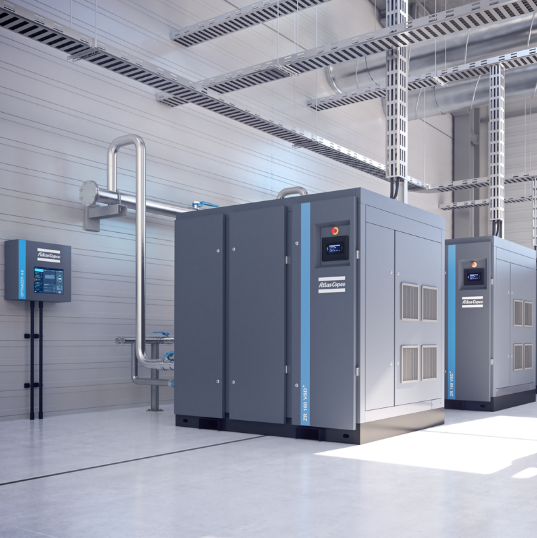
Here’s how DRS Oil-Free rental compressors help reduce the risks involved with winter startups.
Elimination of Oil Contamination Risk
Oil-free compressors remove the primary source of hydrocarbon contamination during startup. This is particularly valuable during transient operating conditions when lubricated systems experience elevated carryover rates.
Stability Under Variable Load Conditions
Oil-free rental compressors tolerate frequent load changes without degradation in air quality. This makes them well-suited for staged restarts, commissioning activities, and temporary operation during winter recovery periods.
Protection of Downstream Treatment Equipment
By delivering oil-free air from startup onward, rental compressors reduce stress on filters and dryers, extending service life and improving overall system reliability.
Best Practices for Reliable Winter Shutdown and Restarts
Reliable winter restarts are achieved through controlled execution rather than rapid pressurization. Best practices focus on verification, monitoring, and gradual system loading.
Recommended steps include:
- All receivers, separators, and low points should be drained and inspected before pressurization.
- Drains must be verified for freeze protection and proper operation.
- Bringing compressors online at reduced load to stabilize temperatures.
- Monitoring dew point and oil content during initial operation.
- Isolating critical pneumatic and instrument air users until specifications are met.
- Using temporary oil-free air and treatment where uncertainty exists.
These practices significantly reduce the likelihood of contamination-related failures.
DRS’s Role in Supporting Winter Shutdowns and Startups
Dynamic Rental Solutions supports winter restart reliability by providing engineered air treatment and oil-free compression solutions tailored to cold-weather operating conditions. Rather than supplying generic equipment, DRS evaluates system requirements, air quality specifications, ambient conditions, and restart sequencing to determine the appropriate configuration.
Our capabilities include:
- Supplying oil-free rental compressors suitable for instrument and process air.
- Providing temporary refrigerated or desiccant drying systems designed for low-temperature operation.
- Integrating multi-stage filtration to manage startup contamination loads.
- Assisting with system layout to minimize moisture and oil migration during restart.
By aligning equipment selection with real-world startup behavior, DRS helps facilities reduce risk during the most vulnerable phase of winter operation. Contact us for support tailored to your specific needs today!