Executive Summary
Sensitive manufacturing leaves little room for wishful thinking. When compressed air comes into contact with a process, product, package, instrument, clean environment, or production-critical system, air quality is no longer a side issue. It becomes part of the manufacturing standard. For years, too many facilities have treated downstream filtration as the main defense against oil contamination. Filters matter. Dryers matter. Air treatment matters. But in applications where purity is non-negotiable, filtration should be the backup plan. Oil-free compressed air changes the risk profile by reducing contamination risk at the source. That matters in food and beverage, pharmaceuticals, electronics, semiconductor work, chemical processing, fermentation, coatings, and other quality-sensitive operations.
Compressed air also represents a meaningful operating load. The U.S. Department of Energy reports that, in a typical industrial facility, about 10% of electricity consumption is used to generate compressed air. When that system fails, underperforms, or contaminates the process, the cost is not just energy. It can be lost product, missed schedules, compliance exposure, and damaged customer confidence.
Mark Shedd, CEO and Head of Global Sales at Dynamic Rental Solutions, clearly emphasizes DRS’s priorities: “Everything we do is oil-free compressed air.” That focus matters because sensitive manufacturing does not need generic air. It needs the right air, at the right pressure, with the right support, when the plant needs it.
Compressed Air Is Part of the Manufacturing Process
Compressed air is easy to underestimate because it runs in the background. But in sensitive manufacturing, it is often tied directly to process stability and product integrity. It may be used to move product, actuate valves, support packaging, control instruments, clean components, maintain process pressure, support fermentation, or operate equipment in controlled environments. In these cases, compressed air is not just plant support. It is part of the production chain.
That is why air quality standards matter. ISO 8573-1 specifies compressed air purity classes for particles, water, and oil, and also identifies gaseous and microbiological contaminants in compressed air systems. Those categories tell the real story: compressed air quality is not one thing. It is a combination of contaminants that must be understood, measured, and managed.
In sensitive manufacturing, the lowest-cost air is not always the right air. The right air is the air that protects the process.
The Problem With Filtration-First Thinking
There is nothing wrong with filters. A good compressed air system needs proper filtration, drying, and treatment. The problem starts when filtration becomes the primary strategy for managing oil risk.
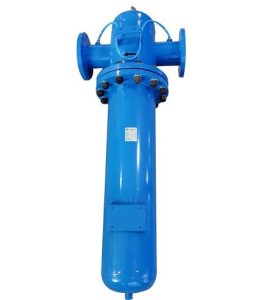
A filter is a maintenance item. It has a service life and can become saturated. Also, it can be undersized, installed in the wrong location, and even overlooked when a system is under heavy load during a turnaround, outage, or production push. That is the DRS perspective: filters are safeguards, not substitutes for source-level prevention.
Oil-lubricated compression begins by introducing oil into the system and then managing its downstream removal. That may be acceptable in general plant air applications. But where product quality, process integrity, or compliance exposure is at stake, that approach deserves a harder look.
Oil-free compression takes a different position. It reduces the risk upstream by removing oil from the compression chamber design. DRS’s products and knowledge describe oil-free compressors as systems that operate without lubricating oil in the compression chamber, making them useful in applications where air purity is essential, and oil contamination can compromise product quality and safety. That is not a small distinction. It is the difference between trying to catch contamination after the fact and designing the system to reduce that risk from the start.

The Real Cost Is Not the Compressor
When people compare compressed air options, they often look first at equipment cost. That is understandable, but it is incomplete. In sensitive manufacturing, the real question is not, “What does the compressor cost?” The better question is, “What does failure cost?”
Shedd shared one recent DRS example involving a corn-based petroleum operation. The customer lost one of its fermentation blowers on Friday. The process required “a specific volume of air at a specific pressure,” and the product could not remain in the silos for more than a limited window without aeration, or it risked going septic or solidifying.
Shedd’s description of the DRS response was straight to the point:
“So it was a fire drill to say the least. But we made it, we got it installed on time, and they were back up and operating.”
That is sensitive manufacturing in the real world. It is not theoretical. It is not just a line item on a maintenance report. A failed air system can put product on the clock.
For fermentation, food, pharmaceutical, electronics, and other sensitive operations, the risk is not limited to compressor downtime. It can become product loss, batch rejection, quality investigation, customer disruption, or a missed production window. That is why clean, reliable air belongs in the risk-management conversation, not just the maintenance budget.
Where Oil-Free Compressor Rentals Fit
Permanent equipment has its place. But permanent ownership is not always the best answer.
Oil-free compressor rentals make sense when the need is urgent, temporary, uncertain, or constrained by capital planning. That includes:
- Emergency outages
- Maintenance turnarounds
- Increased production
- Backup during equipment service
- Temporary process demand
- CAPEX delays
- CAPEX avoidance
- Product trials
- Seasonal or project-based demand
This is where rental becomes more than equipment access. It becomes operational flexibility.
DRS supports compressed air needs during maintenance turnarounds, emergency outages, increased production, and periods of CAPEX delays or avoidance. That positioning fits the reality inside industrial plants: the need for clean air does not always wait for procurement cycles, permanent installation timelines, or perfect planning conditions.
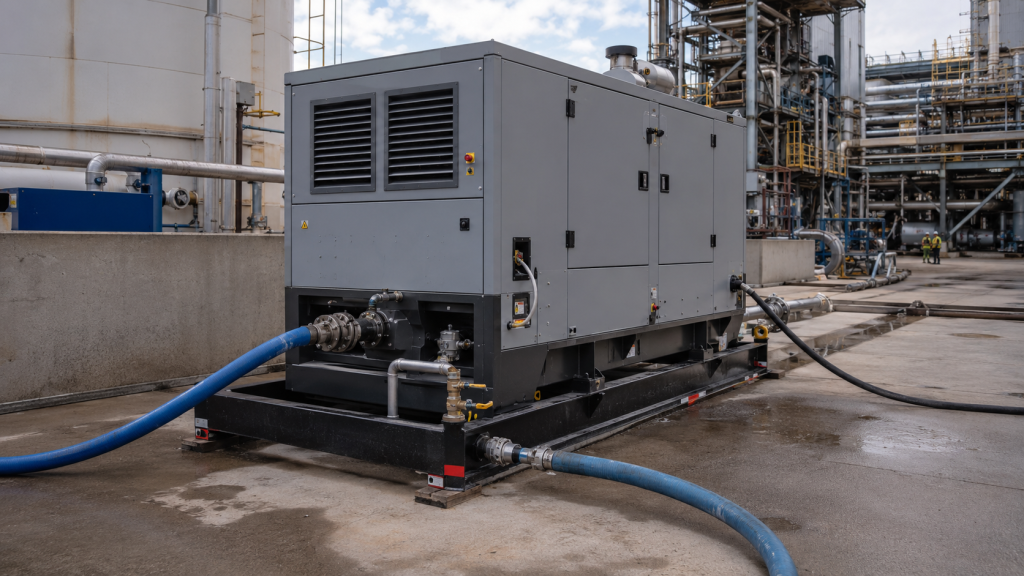
When product quality is on the line, speed matters. But so does fit. The rental system has to be right-sized for the process. Too little flow creates instability. Too much pressure can create its own problems. The right package accounts for flow, pressure, dew point, filtration, hose runs, manifolds, power, access, and redundancy.
The Right Rental Partner Does More Than Drop Equipment
Oil-free rental work is not a simple drop-and-go business. It requires understanding the process, the pressure, the timing, and the consequences of failure.
DRS’s internal growth notes emphasize emergency response, right-sizing service offerings, fast turnaround, vendor partnerships, and acting as a trusted extension of client operations. That is the part manufacturers should pay attention to.
A rental partner for sensitive manufacturing should be able to help answer:
- What air quality does the process require?
- What flow and pressure are non-negotiable?
- What happens if the air supply stops?
- How long can a product remain stable without air?
- Are dryers, filters, manifolds, hose, and cable accounted for?
- Is there a backup plan for the backup plan?
- Who responds after hours if the system needs attention?
The equipment matters. The response matters more.
If your facility depends on clean, oil-free compressed air, do not wait until the system is already down. Contact Dynamic Rental Solutions today to support planned turnarounds and emergency outages with oil-free compressor rental solutions tailored to the job, timeline, and risk.
When contamination is not an option, start with clean air at the source.