
In industries where contamination is measured in microns, compressed air quality cannot be treated as a background utility. It is a production-critical requirement. Food processors, pharmaceutical manufacturers, electronics fabricators, and other purity-sensitive facilities rely on compressed air for product contact, instrumentation, packaging, cleaning, controls, and production support. When that air contains excess particles, moisture, or oil, the result can be more than poor performance. It can create product quality concerns, failed audits, production holds, or costly remediation. That is why many facilities use ISO 8573-1 as the standard for defining compressed air purity to maintain its quality.
The question is not only whether a permanent system can meet ISO 8573-1 compressed air quality requirements. In many situations, facilities also need to know whether rental compressed air equipment can meet the same standard during shutdowns, equipment delays, emergency outages, or temporary production increases. The answer is yes, when the rental system is properly engineered, configured, and verified.
Can Rental Compressed Air Equipment Meet ISO 8573-1 Standards?
Rental compressed air systems can be configured to meet ISO 8573-1 air purity requirements when the package includes the correct compressor technology, drying method, filtration stages, and system design. A rental unit alone does not guarantee compliant air. Compliance depends on the complete air treatment package, including how air is compressed, dried, filtered, monitored, and delivered to the point of use. For facilities operating under FDA, GMP, HACCP, or internal quality frameworks, this distinction matters. The treatment of temporary air must be with the same seriousness as permanent plant air, especially when it supports direct product contact, sensitive instrumentation, cleanrooms, or regulated production processes.
What ISO 8573-1 Actually Measures
ISO 8573-1 defines compressed air purity classes for three primary contaminant categories:
| Contaminants | What It Measures | Why It Matters |
| Solid particulates | Particle size and concentration | Helps prevent product, surface, and equipment contamination |
| Water | Pressure dew point | Reduces moisture-related quality risks and process instability |
| Oil | Total oil concentration | Controls aerosol, liquid, and vapor contamination |
Each category receives its own classification. Lower class numbers indicate higher purity.
For example, a facility may specify air quality as a three-part class, such as 1.2.1. The first number refers to solid particles, the second refers to water content, and the third refers to oil content.
A specification such as 1.2.1 may be a requirement in certain purity-sensitive applications, depending on the process, product exposure risk, and regulatory expectations. The exact requirement should always be based on the facility’s quality standards, risk assessment, and application needs.
Why Standard Plant Compressed Air Quality Falls Short of ISO 8573-1
Compressed air drawn from most plant systems passes through oil-lubricated compressors, ambient intake environments, and distribution networks that may include aging piping, receivers, and condensate traps. Even well-maintained systems can introduce contamination from:
- Oil carry-over from compressor seals and lubricants
- Moisture ingress during seasonal humidity swings or dryer degradation
- Particulate contamination from internal corrosion, pipe scale, or desiccant fines
- Microbial growth in improperly maintained condensate zones
For general plant operations, these contamination levels may be acceptable. For pharmaceutical tablet coating lines, electronics assembly environments, or beverage packaging, they are not. The gap between general plant air and ISO 8573-1-compliant air requires a deliberate treatment system that integrates the right compressor technology, drying method, and filtration stages in the correct sequence.
The Rental Advantage for Compliance-Critical Applications
Rental air systems usually serve as emergency backup or seasonal capacity supplementation. That perception undersells what a properly engineered rental system can deliver. At Dynamic Rental Solutions, our compressed air rental packages for purity-sensitive industries match the same technical requirements as permanent installations.
Oil-Free Compression at the Source
Meeting ISO 8573-1 Class 1 for oil, 6.24✕10-10 lb/ft³ or less, demands an oil-free compression platform. Our rental fleet includes oil-free rotary screw and centrifugal compressors that eliminate the risk of lubricant carry-over at the source. Managing an oil-lubricated unit down to means the complete elimination of contamination pathways.
For industries where even trace hydrocarbons can compromise product integrity or cause an inspection failure, oil-free compression is the baseline. Our rental units are configured, tested, and documented for compliance before they reach your site.
Desiccant Drying for Critical Dew Points
Refrigerated dryers are effective for many industrial applications, but they typically achieve pressure dew points in the range of 37.4°F. That is adequate for general plant air but insufficient for ISO 8573-1 Class 2 or Class 1 dew-point specifications. Instrumentation air, pharmaceutical process air, and cleanroom environments often require pressure dew points at -40°F or lower.
Desiccant dryer systems accomplish this through adsorption-based drying, typically using activated alumina or molecular sieve desiccant beds in a dual-tower, alternating-cycle design. Our rental desiccant dryers are available in heatless and heat-regenerated configurations to meet your flow-rate requirements and energy constraints. They can be deployed as standalone drying solutions integrated into your existing compressed air header, or as part of a complete turnkey air package.
Multi-Stage Filtration to Specification
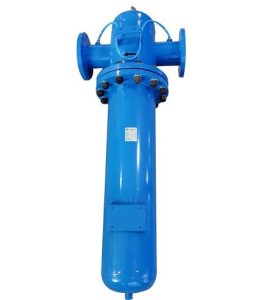
Achieving ISO 8573-1 compliance requires more than the right compressor and dryer. It requires a complete filtration train matched to the target purity class. A properly configured system includes:
- Coalescing pre-filters to remove bulk liquid and aerosol contamination, to 3.94✕10-4 in and finer
- High-efficiency filters targeting sub-micron particulates and aerosol oil, to 3.94✕10-6 in
- Activated carbon adsorbers for oil vapor removal reaching a total oil content below 6.24✕10-10 lb/ft³
- Sterile or membrane filters at the point of use, where microbial control is necessary
Our rental accessory packages include filter skids sized and plumbed for your specific flow and pressure requirements. Each skid is plug-and-play ready, minimizing installation time and integration complexity.
Applications Where Rental Compliance Matters Most
Pharmaceutical and Biotech Manufacturing
GMP environments require documented air quality for any air contacting APIs, excipients, product surfaces, or packaging. Turnaround maintenance, capacity expansion, and validation bridges during compressor replacement are common scenarios in which temporary ISO-compliant air is a requirement without disrupting regulatory continuity.
Food and Beverage Processing
Direct and indirect product contact air must meet hygiene and purity standards aligned with ISO 8573-1 and recognized by HACCP frameworks. Seasonal production peaks, equipment failures during high-volume runs, and facility expansions create short-term demand for compliant air that permanent infrastructure may not support.
Electronics and Semiconductor Fabrication
Pneumatic assembly, conformal coating processes, and cleanroom environments require ultra-clean, ultra-dry air to prevent surface contamination, electrostatic damage, and moisture-induced failure. Particulate and oil contamination at levels acceptable in other industries are disqualifying in precision electronics manufacturing.
Compliance Is Not Incidental. It Is Engineered.
The ability to produce ISO 8573-1-compliant air from a rental package is not an accident. It is the result of selecting the right equipment platform, configuring the treatment train to the target purity class, and verifying performance before equipment enters service. That is exactly how Dynamic Rental Solutions approaches every deployment in purity-sensitive industries.
When clean air is not optional, neither is the engineering behind it.
Contact Dynamic Rental Solutions today to discuss your air purity requirements. Our team will assess your target ISO class, flow demand, and operational timeline, and then configure a rental solution tailored to meet them.
Frequently Asked Questions About ISO 8573-1 Rental Air
ISO 8573-1 is a compressed air quality standard that classifies air purity based on particles, water, and oil content.
Yes. Rental compressed air systems can be configured to meet ISO 8573-1 requirements when the proper compressor, dryer, filtration, and verification processes are used.
It depends on the required oil class and application. For many purity-sensitive applications, oil-free compression is ideal because it reduces the risk of oil contamination at the source.
The use of desiccant dryers is common when applications require very low moisture levels or pressure dew points that refrigerated dryers typically cannot meet.
Pharmaceutical, biotech, food and beverage, electronics, semiconductor, medical device, and cleanroom manufacturing environments commonly use ISO 8573-1 to define compressed air purity requirements.