When it comes to temporary air compressor rentals, the default choice for most users is the rotary screw compressor. But there may be better alternatives for high-volume or long-duration projects, especially when energy efficiency and uptime matter. This article compares rotary screw vs dynamic compressors, helping rental customers and industry professionals make informed, cost-effective decisions for their operations.
What is a Rotary Screw Compressor?
Rotary screw compressors are positive displacement machines, meaning they compress air by mechanically reducing the volume within a sealed chamber. They use two intermeshing helical rotors (male and female) that trap and compress air as it travels along the rotors from the suction to the discharge end.
This continuous compression process delivers a steady stream of air. Thus, rotary screw compressors are ideal for industrial and construction applications that have consistent airflow requirements. When selecting a rotary screw compressor, the key factors to consider are as follows:
- Oil-flooded vs Oil-free: Oil-flooded rotary screw compressors inject a small amount of oil into the compression chamber to cool, lubricate, and seal the compression process. These are common in most rental applications due to their durability and efficiency. Oil-free variants, while more expensive, are ideal for industries such as food processing, pharmaceuticals, and electronics where air purity is critical.
- Typical Sizes: Rental fleets usually carry units ranging from 50 HP to 400 HP, delivering approximately 200 to 1600 CFM. This covers the majority of temporary air needs across multiple industries.
- Drive Options: Rotary screw compressors are available in diesel-powered or electric drive configurations. Diesel units are self-contained and ideal for remote or outdoor applications, whereas electric models offer higher efficiency for indoor or power-supplied environments.
Why Rotary Screw Compressors Dominate the Rental Market
Rotary screw compressors are widely preferred in the rental market due to their balance of performance, portability, and ease of integration. This is because of the following features:
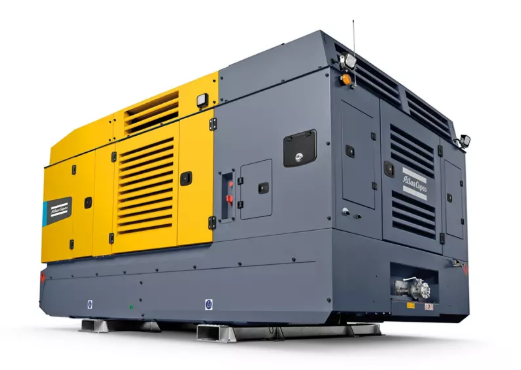
- Portability and Availability: Their trailer-mounted or skid-mounted designs allow easy transport and quick deployment. Diesel variants are especially flexible, as they require no external power infrastructure.
- Rental Fleet Integration: These compressors are modular and readily available in most rental inventories, making them the go-to solution for urgent air requirements.
- Modularity and Redundancy: Multiple units can be configured in parallel to meet fluctuating air demands. If one unit fails, others can continue operation, providing redundancy and minimizing downtime.
- Control Limitations: Despite their advantages, standard rotary screw compressors may lack advanced control capabilities like load-following or variable speed unless equipped with a Variable Frequency Drive (VFD). Additionally, frequent transportation and environmental exposure can lead to mechanical wear, vibration sensitivity.
The Cost Considerations of Diesel-Powered Rotary Screw Rentals
Diesel-powered compressors offer deployment flexibility but incur notable operational expenses that accumulate exponentially over time.
- Fuel Consumption: A large-capacity unit, such as a 1600 CFM diesel rotary screw compressor, can consume up to 600 gallons of diesel per day, translating to $2700.00 or more per day, depending on fuel prices.
- When Diesel Is Necessary: In locations without grid access or in rugged outdoor conditions, diesel is the only viable choice. Construction sites, temporary setups, and remote facilities often depend on diesel-powered compressors.
- Total Rental Cost: Beyond rental fees, consider the full cost of diesel units, including fuel consumption, delivery and pickup charges, routine maintenance, oil change intervals, and emission compliance fees (especially in regulated environments). These factors significantly affect the total cost of rental over time.
When Electric Compressors Make More Sense
Electric rotary screw compressors are a more economical and environmentally friendly choice when conditions allow.
- Operational Advantages: Electric units are cleaner, quieter, and more energy-efficient than diesel-powered alternatives. They also have fewer moving parts in the drive system, resulting in lower maintenance requirements.
- Power Infrastructure Requirements: A reliable electrical supply is essential. In some cases, site upgrades may be necessary to support large HP units (e.g., 12,470V three-phase power). Facilities with adequate infrastructure benefit from reduced operating costs.
- Scalable Configurations: Multiple electric units can be networked to increase total air capacity. These setups enable efficient load sharing, system redundancy, and staged operation to match demand.
- Backup Strategy: In mission-critical applications, maintaining a backup electric unit ensures system uptime. Auto-start panels and control logic can further improve system reliability.
Introducing Dynamic Compressors: A Smarter Choice for Long-Term Rentals
Dynamic compressors, particularly centrifugal compressors, offer significant benefits in long-duration and high-volume air applications vs their rotary screw counterparts.
Unlike positive displacement compressors, dynamic compressors operate by converting kinetic energy into pressure. Air is accelerated through high-speed impellers and then slowed in diffusers, increasing pressure through velocity conversion. Thus, resulting in the following:
- High Flow Output: Capable of delivering thousands of CFM in a compact footprint.
- Energy Efficiency: Better suited for steady-state, high-demand environments.
- Demand Responsiveness: Advanced control systems allow automatic adjustment to air load variations, improving energy savings.
- Maintenance Benefits: With fewer wear-prone components and no internal lubrication cycle, centrifugal compressors require less frequent maintenance.
- Ideal Conditions: Best suited for operations requiring continuous air supply over 1 to 12 months or more, such as in refineries, petrochemical plants, or large-scale manufacturing.
- Site Considerations: Installation may require additional planning for power capacity, foundation setup, cooling system integration, and start-up support.
Choosing Between Rotary Screw vs Dynamic Compressors
So, you’re trying to decide between a rotary screw compressor and a dynamic (centrifugal) one? Don’t worry—it’s not as complicated as it sounds. The best choice depends on how long you’ll need it, airflow requirements, and what your site can support. Let’s break it down.
How Long Do You Need It?
If your project is short-term—say, under one month—rotary screw compressors are often the go-to. They’re quick to set up, easy to move, and get the job done without a lot of fuss. But if you’re running a longer operation, dynamic compressors start to shine. Over time, their energy efficiency and reliability can save serious money.
How Much Air Are You Moving?
Need just a few hundred CFM? Rotary screws are perfect for that—especially if your demand fluctuates. But if you’re consistently consuming 3,000 CFM or more, a dynamic compressor is usually the smarter, more cost-effective choice. It handles high-volume applications like a champ.
What Power Do You Have On-Site?
Dynamic compressors typically run on medium-voltage electric power, so you’ll need a solid, stable electrical setup. Rotary screws are more flexible here—they can run on electric or diesel, giving you more options in remote or temporary setups.
What About Energy and Maintenance?
Dynamic compressors are built for efficiency. They use advanced controls and are capable of part loading to adjust output based on demand, keeping energy use in check. And because they have fewer moving parts and no oil in the compression chamber, maintenance is minimal. Rotary screws, on the other hand, need more frequent attention—oil changes, filter swaps, and regular inspections. That’s not a deal-breaker, but it’s worth factoring into your decision.
What Are You Using It For?
If your process involves steady, continuous air demand—like drying, aeration, or conveying—dynamic compressors are a great fit. They deliver consistent, oil-free air with high efficiency. For more portable, flexible needs or intermittent use, rotary screw compressors usually make more sense.
| Decision Factor | Rotary Screw Compressor | Dynamic Compressor |
| Duration | Best for short-term (<1 month) | Ideal for long-term (1+ months) |
| Flow Range | Low to medium (200–1600 CFM) | High (>3000 CFM) |
| Deployment | Portable, fast setup | Portable with sub-skid to address mobility |
| Energy Efficiency | Moderate, diesel, or basic electric | High, optimized with part-load logic |
| Maintenance | Frequent (oil, filters, inspections) | Low (few moving parts, dry operation) |
| Power Requirement | Flexible (diesel or grid) | Requires stable electric power (typically 4160V) |
Final Thoughts: Tailoring Your Compressor Rental to Your Project
There is no one-size-fits-all solution for air compressor rentals.
Rotary screw compressors remain the industry leader for quick deployment, mobility, and general-purpose use. However, for extended durations, high airflow requirements, or where energy efficiency and uptime are critical, dynamic compressors offer a more sustainable and cost-effective solution.
The best approach is to analyze your project’s specific needs, like duration, flow demand, infrastructure, and operational priorities. With the right evaluation, you can optimize both performance and cost.
Choosing Between Rotary Screw vs Dynamic Compressors at Dynamic Rental Services
At Dynamic Rental Solutions, we specialize in helping clients match the right compressor to their unique operational profile. Our engineering team works closely with customers to evaluate:
- Compressed air requirements (CFM, pressure)
- Site conditions and available power
- Project timeline and lifecycle costs
- Scalability, redundancy, and environmental compliance
Whether you’re powering a shutdown, scaling up a facility, or managing a long-term industrial process, we’ll design a rental plan that balances performance, cost efficiency, and uptime reliability.
Contact us today and get professional help.