
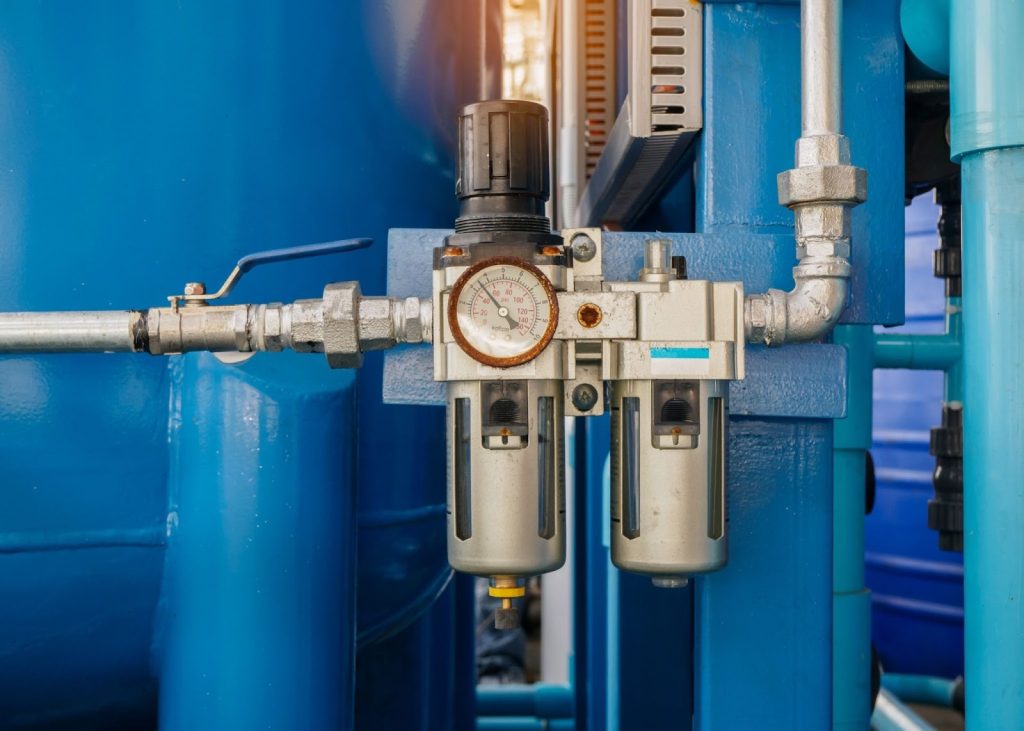
Compressed air is essential for powering tools, actuating valves, controlling automated systems, and several other manufacturing and processing activities. Yet not all compressed air is the same, as it varies depending on its application. This article explores the differences in quality, treatment requirements, and applications of plant air vs instrument air.. It also highlights how Dynamic Rental Solutions (DRS) provides oil-free compressor rentals and air treatment systems that meet both plant air and instrument air standards, ensuring reliable performance and compliance in every operation.
The Role of Compressed Air In Industry
Compressed air, or the fourth utility, is as essential to modern industry as electricity, water, and natural gas. Across manufacturing, energy, and process facilities, compressed air performs a wide range of duties like operating valves, powering pneumatic tools, transporting materials, and supporting control systems. Yet, the purity and dryness requirements can vary drastically depending on its use.
- Plant air typically serves general-purpose pneumatic equipment, where moderate moisture or oil carryover can be tolerated.
- In contrast, instrument air feeds sensitive control instruments that demand clean, dry, oil-free air to prevent malfunction or corrosion.
Understanding the distinction between them is critical for maintaining reliability, efficiency, and system safety. DRS supports both requirements with oil-free compressor rentals and advanced air treatment systems, ensuring clean, dry air where and when it matters most.
What is Plant Air?
Plant air refers to compressed air used for general facility operations. It powers pneumatic tools, cylinder actuators, air knives, and other mechanical equipment that are not highly sensitive to minor contaminants.
Because these uses are mechanical rather than electronic, plant air systems typically have moderate air quality requirements. Some oil vapor or moisture can be acceptable, depending on the process.
Common features of a plant air system include:
- Standard air compressors (oil-lubricated or oil-free).
- Air dryers to remove bulk moisture.
- Particulate filters to capture dust or rust particles.
- Distribution piping, sized to maintain pressure and minimize losses.
This setup delivers reliable, cost-effective performance for most production and maintenance applications.
What is Instrument Air?
Instrument air serves a more critical function than plant air. This is because it supplies control systems, sensors, and pneumatic instrumentation that require consistent purity to operate safely and accurately. Even trace amounts of oil or moisture can foul instruments, cause drift in readings, or lead to costly shutdowns.
Instrument air must meet stringent cleanliness standards such as ISO 8573.1 Class 1 or 2, which define limits for solid particles, water content, and oil concentration. Achieving this level of purity requires specialized air treatment equipment, including:
- Oil-free air compressors to eliminate hydrocarbon contamination.
- Desiccant dryers for ultra-low dew points (often below -40°F).
- High-efficiency coalescing and activated carbon filters to remove aerosols and vapors.
Instrument air systems are widespread in chemical plants, refineries, power generation facilities, and food processing operations, where precision and reliability are non-negotiable.
Key Differences Between Plant Air vs Instrument Air
Here are the key differences in Plant Air and Instrument Air. In short, plant air keeps things moving; instrument air keeps things precise.
| Aspect | Plant Air | Instrument Air |
| Air Quality | Moderate; some moisture or oil acceptable. | Ultra-clean, dry, oil-free. |
| Treatment | Basic: refrigerated dryer and particulate filter. | Advanced: oil-free compressor, desiccant dryer, multi-stage filtration. |
| Applications | Pneumatic tools, valves, actuators, and general plant use. | Instrumentation, control systems, and sensitive pneumatic devices. |
| Consequences of Contamination | Reduced efficiency, increased wear on tools. | Instrument failure, process upset, or unsafe operations. |
Air Treatment Systems – The Bridge Between the Two
Whether the goal is moderate or ultra-clean air, treatment systems are what make the difference. Proper air treatment ensures that compressed air delivered to each part of the plant meets its specific operational and quality requirements.
Effective air treatment begins at the compressor discharge, where moisture, oil aerosols, and solid particulates must be separated before they enter the distribution network. Systems designed to serve both plant and instrument air applications often incorporate multi-stage treatment, allowing operators to tailor air purity to different process zones.
Key components and functions include:
- Filter skids: Multi-stage filtration assemblies remove particulates, oil aerosols, and vapors in sequence. Coalescing filters handle liquids, particulate filters trap solids, and carbon filters polish the air to remove hydrocarbons and odors.
- Dryers: Moisture removal is crucial to prevent corrosion and freezing. Refrigerated dryers are typically used for plant air, offering dew points around 38°F, while desiccant dryers achieve dew points down to -40°F or lower for instrument air.
- Air receivers: These tanks buffer demand surges, stabilize pressure, and allow moisture to settle out before further treatment stages. They also improve energy efficiency by reducing compressor cycling.
- Condensate management systems: Automatic drains and oil-water separators ensure that collected condensate is properly removed and disposed of in an environmentally compliant manner.
- Monitoring equipment: Dew point transmitters, differential pressure gauges, and filter integrity sensors help operators continuously verify air quality and detect system degradation before it leads to downtime.
Air Treatment Systems at Dynamic Rentals
Dynamic Rental Solutions provides modular, oil-free, and portable air treatment accessories that can be rapidly deployed to support either plant air vs instrument air requirements. Each system integrates high-performance filtration and drying technology within a compact, transportable skid. Thus, making them ideal for turnarounds, capacity expansions, and emergency operations.
Every DRS system is engineered for plug-and-play integration, ensuring minimal downtime and compliance with ISO 8573.1 standards. Paired with continuous dew point monitoring and filtration performance tracking, these systems give operators the confidence that every cubic meter of air meets its intended specification.
Choosing the Right System for Your Application
From a design and operations standpoint, selecting between plant and instrument air begins with defining end-use sensitivity and process criticality. Engineers should evaluate:
- The acceptable limits for oil, moisture, and particulate contamination
- The environmental conditions and dew point required for reliability
- Whether air service continuity is safety-critical or production-critical
However, optimal system design also considers redundancy, scalability, and lifecycle economics. For example, integrating oil-free compressor technology and modular filtration trains can future-proof systems against changing process requirements or seasonal variations in air demand. Likewise, implementing online dew-point monitoring and predictive filter maintenance reduces unplanned downtime and ensures operational compliance.
DRS engineers perform comprehensive site assessments, simulate load conditions, and review process interlocks to ensure the air system supports both reliability and efficiency targets. Whether you require short-term rental capacity, permanent upgrades, or emergency response systems, DRS provides solutions engineered to ISO standards and verified in real-world performance environments.
Conclusion – Purity, Performance, and Reliability
Both plant air and instrument air are vital to industrial operations, but they serve distinct roles. Plant air drives tools and machinery; instrument air safeguards control and measurement systems. With proper air treatment and maintenance, operators can ensure both systems deliver maximum reliability, efficiency, and safety.
For any concerns, do not hesitate to reach out to us at Dynamic Rental Solutions. From oil-free compressor rentals to complete air treatment packages, we provide performance and flexibility you can trust.


