Compressed air is a core utility in industrial facilities, but the air leaving a compressor is rarely suitable for direct use. In its untreated state, it carries moisture, oil, and particulates. These contaminants cause corrosion, foul valves, damage instrumentation, and compromise product quality. The outcome is predictable: reduced reliability, accelerated wear, and unnecessary downtime. Air treatment converts this raw air into clean, dry, stable air that meets modern process demands. This article reviews how air treatment removes moisture, oil, and particulates from compressed air to protect equipment, prevent contamination, and ensure reliable system performance.
Understanding Air Contaminants and Their Impact
Compressed air always contains three primary contaminants, and each one impacts the system differently. Even small increases in contamination can escalate into mechanical failures or quality issues if left untreated.
Moisture
Moisture is introduced naturally as ambient air is compressed. Without proper drying, water vapor condenses in the distribution system, leading to corrosion of steel piping, internal rust flaking, and freezing in outdoor lines during cold seasons. Wet air also affects pneumatic actuator seals, washes away lubrication films, and accelerates wear in tools and cylinders.
Oil
Oil contamination can originate from compressor lubrication systems or from entrained hydrocarbons in the intake air. Aerosolized oil coats valve internals, causes sticky or erratic valve operation, and fouls pressure transmitters and sensors. In clean-process industries like food, pharma, and electronics, oil carryover is unacceptable due to contamination risks and regulatory restrictions. Thus, oil-free compressors are a requirement in these industries.
Particles
Particles come from the ambient environment, compressor wear, pipe scaling, or rust. These solids accumulate in small orifices, instrumentation ports, and pneumatic controllers, leading to drift, blockage, or complete failure. Contamination at this level is a leading contributor to unstable control loops and unpredictable process behaviour.
Understanding the source and magnitude of these contaminants is the first step in specifying the right air treatment system.
Air Treatment Process in Industrial Systems
Air treatment involves the systematic removal of all major contaminants to ensure that compressed air meets the quality requirements of modern industrial systems. Each stage in the process targets a specific contaminant and builds upon the previous layer, thus creating a controlled and predictable path to clean, dry, and stable air. The following sections highlight key aspects of industrial air treatment systems.
Filtration Stages During Air Treatment
The filtration process aims to remove solid particulates, liquid aerosols, and vapor-phase contaminants before the air stream reaches downstream equipment. Each filtration stage depends on particle size distribution, expected contaminant load, and the required ISO 8573 purity class.
- Pre-Filtration for Particulate Removal: The first stage uses a particulate pre-filter, typically constructed with pleated synthetic media or sintered metal elements. These filters target larger solids such as rust, scale, dust, and compressor-generated debris. Pre-filters normally capture particles down to 5 microns and can operate at low differential pressure to protect downstream components. Their role is to prevent heavy particulate loading in the finer coalescing filters that follow.
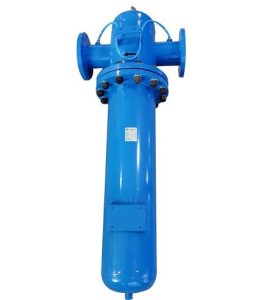
- Coalescing Filtration for Oil Aerosols: The second stage uses high-efficiency coalescing filters that remove liquid oil aerosols, emulsified water droplets, and fine particulates. These filters use a deep-bed microglass element that causes submicron aerosols to collide, merge, and drain to a sump for automatic discharge. Coalescing filters routinely achieve efficiencies down to 0.01 micron with oil carryover levels as low as 0.01 ppm by weight. System designers pay close attention to pressure drop, since coalescing filters introduce additional resistance that compressor capacity or system pressure adjustments need to offset.
- Activated Carbon for Vapor Removal: The third stage is vapor-phase purification using activated carbon beds or carbon-loaded filter elements. Moreover, this stage removes hydrocarbon vapors and oil odors that cannot be captured in liquid or particulate form. Activated carbon works through adsorption, not absorption, hence contaminants adhere to the surface of the carbon granules. Because adsorption capacity is finite, these filters require scheduled replacement to avoid breakthrough. This final polishing stage is essential for processes that require odor-free, hydrocarbon-free air.
Drying and Purification
Moisture is then removed using drying systems that operate via refrigeration or adsorption, depending on the required dew point. When vapor removal is necessary, activated carbon elements are added as a final purification stage to eliminate hydrocarbons and odours.
Ensuring ISO 8573 Compliance in Air Treatment
This multi‑stage sequence ensures that the air delivered to the plant meets the required ISO 8573 quality class for the application. DRS supplies rental treatment systems that maintain stable air purity across wide variations in ambient temperature, humidity, and load. Each skid is engineered for predictable, compliant performance from the moment it is connected.
Types of Air Dryers: Choosing the Right Solution
Drying is the most crucial step in preventing corrosion, freezing, and line contamination. Industrial facilities typically use one of two dryer types, depending on process sensitivity.
Refrigerated Dryers
Refrigerated dryers cool the air stream to condense moisture, achieving typical pressure dew points around 35 to 41°F. This level of dryness is suitable for most plant air systems, where the loads include pneumatic tools, blow-offs, and general-purpose equipment. They typically use a vapor compression refrigeration cycle that operates with a heat exchanger, evaporator, and moisture separator. Standard units deliver pressure dew points near 37°F., which is sufficient for general plant air and non-critical pneumatic tools. They also provide stable performance in controlled indoor environments and offer low operating costs. Engineers account for load variation because refrigerated dryers operate most efficiently at steady flow and moderate inlet temperatures.
Desiccant Dryers
Desiccant dryers are used when significantly lower dew points are required. These dryers utilize hygroscopic materials such as activated alumina, silica gel, or molecular sieve to adsorb moisture from the air stream, delivering dew points as low as –40°F or lower when required.
Two primary configurations are heatless and heated.
- Heatless dryers rely solely on dry purge air for regeneration and are common in remote or hazardous locations.
- Heated dryers use internal heaters or blower-assisted regeneration to reduce purge losses and improve energy efficiency.
Desiccant systems commonly achieve dew points at or below -40°F, which is necessary for instrument air, analytical systems, and outdoor installations exposed to freezing conditions. Engineers select the desiccant type based on adsorption capacity, thermal stability, and regeneration rate. DRS supplies desiccant dryers and other temperature control equipment as portable, skid-mounted units. Each package includes integrated filtration and instrumentation, thus allowing operators to tie into existing systems without reconfiguring plant piping.
Oil-Free Air: The Gold Standard for Critical Operations
For industries such as pharmaceuticals, food processing, chemical manufacturing, and power generation, oil-free air is mandatory. This is because oil-free compressors eliminate the risk of hydrocarbon contamination at the source, protecting sterile processes, cleanrooms, sensitive measurement instruments, and catalytic systems. Oil-free air also reduces maintenance costs. Without oil vapor in the stream, filters last longer, valves stay cleaner, and dryers operate more efficiently. The overall system maintains lower pressure drops and more consistent performance.
DRS maintains a fleet of 100% oil-free compressor rental packages designed to maintain ISO compliance under all loading conditions. These systems are field-proven, energy-efficient, and supported by continuous monitoring to ensure clean, stable air delivery.
Practical Considerations for Selecting Air Treatment Equipment
Choosing the right air treatment system begins with a clear understanding of the air quality requirements. Engineers should consider several key factors:
- Required ISO 8573-1 class for particles, oil, and moisture.
- Ambient and process conditions, including humidity and temperature swings.
- System flow rate and allowable pressure drop.
- Sensitivity of the downstream application.
DRS engineers support plant teams by conducting air quality assessments, reviewing system layout, and recommending the optimal combination of dryers, compressors, and filters. This ensures system performance aligns with both production requirements and reliability targets.
Integrated Air Treatment Packages from DRS
Dynamic Rental Solutions provides complete, turnkey air treatment systems engineered for immediate deployment. Each package is configured to meet process-specific requirements and includes:
- Oil-free compressors that eliminate source contamination.
- Desiccant or refrigerated dryers, depending on dew point requirements.
- Multi-stage filtration, including coalescing and activated carbon elements.
- Air receivers to buffer demand and stabilize pressure.
- Plug-and-play electrical and piping connections.
These rental systems support short-term outages, emergency response, planned maintenance intervals, and peak seasonal demand. With 24/7 technical assistance, DRS ensures continuous performance, rapid troubleshooting, and stable air quality regardless of site conditions. Feel free to get in touch with our support team for specialized queries.