When you need to move large amounts of air quickly and efficiently, high-volume blowers are the answer. Whether you’re supporting ventilation in confined spaces, maintaining positive pressure in process environments, or handling emergency fume extraction, these high-capacity units are critical across industries.
This article reviews how high-volume blowers work, key application scenarios, and how Dynamic Rental Solutions helps clients meet airflow demands through scalable, efficient rental packages.
What Are High Volume Blowers?
High-volume blowers are high-capacity air movers designed to displace large amounts of air. These air measurements are generally in cubic feet per minute (CFM) or cubic meters per hour (m³/h). Unlike standard fans, which provide general air circulation at low pressure, blowers deliver higher pressures and overcome system resistance. This makes them ideal for industrial processes requiring controlled, directed, and sustained airflow.
Typical Capacity Range: 5,000–100,000+ CFM, with specialty units exceeding 150,000 CFM for large-scale projects.
Common Types of High-Volume Blowers
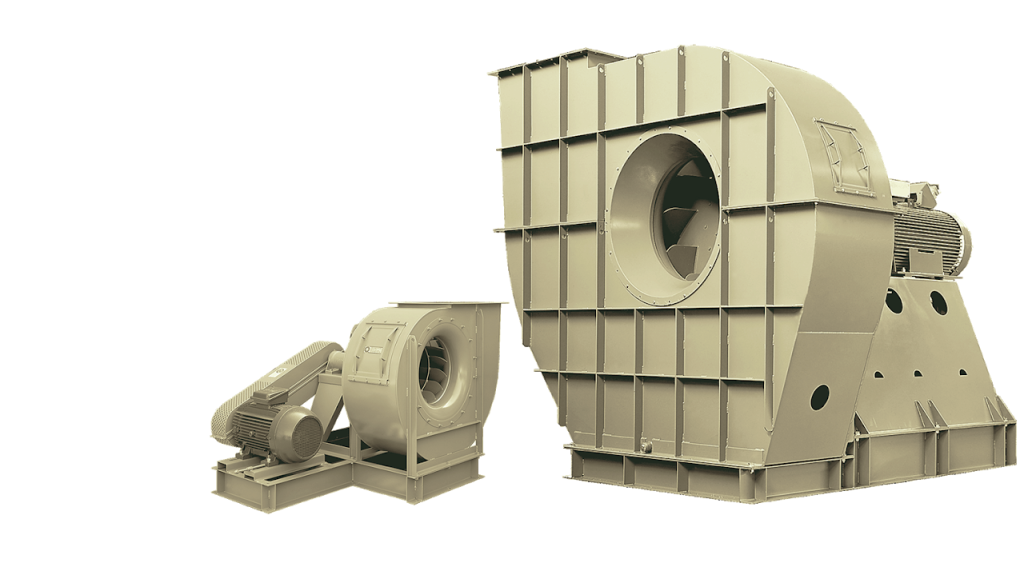
- Centrifugal blowers – Generate airflow by using centrifugal force from rotating impellers. Moreover, they deliver steady high-volume output at moderate pressures and are common in plant ventilation and cooling systems.
- Axial blowers – Use propeller-style blades to move air along the axis of rotation. Compact and lightweight, they are ideal for temporary ventilation setups or emergency fume extraction.
- Roots-type (positive displacement) blowers – Operate using meshing rotors that trap and push air, ensuring constant volume regardless of backpressure. Hence, they are ideal for pneumatic conveying and dust or bulk material handling.
Unlike fans, which primarily circulate air in open spaces, blowers are designed for industrial robustness. Basic features include the ability to resist harsh environments, maintain airflow consistency under load, and integrate with ducting, filters, and silencers.
How Do High-Volume Blowers Work?
At their core, blowers function by drawing in ambient air, imparting velocity or pressure through mechanical action, and then discharging the airflow into ducts or open environments. The engineering behind their operation ensures reliability, efficiency, and adaptability.
Key Design Features
Here are the key design features of high-volume blowers.
- Variable Frequency Drives (VFDs): Enable precise speed adjustments, thus allowing operators to tailor airflow to process demands without wasting energy.
- High-efficiency motors: Meet or exceed IE3/IE4 efficiency standards, lowering power consumption and reducing long-term operating costs.
- Noise attenuation systems: Silencers, acoustic insulation, and advanced housing designs reduce sound emissions for compliance in noise-sensitive zones.
- Weatherized enclosures: Ensure performance under outdoor, offshore, or chemical exposure conditions.
Performance Considerations
Keep the following performance considerations in mind while selecting a high-volume blower.
- Airflow capacity (CFM or m³/h): Determines suitability for the required ventilation or cooling load.
- Static pressure capability (inches WC or mbar): Defines the ability to overcome ductwork, bends, filters, and process restrictions.
- Temperature tolerance: High-temperature blowers withstand hot exhausts or industrial process gases; cold-weather designs resist icing and freezing.
- Duty cycle: Continuous operation requires more robust builds, while intermittent tasks may allow lighter-duty models.
Correct blower sizing is critical. Undersizing results in inadequate ventilation, while oversizing increases energy consumption, equipment wear, and cost, thus necessitating blower repair.
Key Applications for High Volume Blowers
High-volume blowers are indispensable across industrial, manufacturing, and emergency response sectors:
- Industrial ventilation: Removing excess heat, fumes, moisture, and particulate matter from production areas, foundries, or underground tunnels.
- Tank and vessel ventilation: Purging confined spaces during cleaning, welding, or inspection to ensure worker safety under OSHA confined space entry standards.
- Process cooling: Supplementing or replacing cooling systems for transformers, turbines, generators, or material cooling in hot zones.
- Building pressurization/depressurization: Controlling airflows in cleanrooms, laboratories, or facilities handling hazardous materials.
- Dust and fume extraction: Capturing welding smoke, solvent vapors, chemical fumes, or combustible dust to improve worker safety and comply with NFPA regulations.
- Emergency response: Rapid deployment during HVAC failures, fire damage recovery, chemical releases, or contamination incidents.
The design of DRS blower systems is with compliance in mind, meeting requirements such as OSHA 29 CFR 1910.146 for confined spaces and NFPA codes, NFPA 652 (Combustible Dust) for dust/fume handling, and NFPA 91 (Exhaust Systems).
Blowers vs Fans: The Critical Difference
Although often used interchangeably in casual conversation, fans and blowers operate on fundamentally different principles of air movement and system resistance management.
Pressure and Flow Characteristics
- Fans are designed to move air freely with little restriction, typically generating a pressure rise of less than 0.5 psi, typically 1-5 inches water column. They excel at bulk circulation of air in open environments, such as cooling large halls, improving thermal comfort, or maintaining background ventilation.
- Centrifugal Blowers, by contrast, operate in the intermediate pressure between fans and PD Blowers and can provide pressures up to 150 inches of water column, making them ideal when airflow must overcome duct resistance, filters, bends, or other system impedances.
- PD Blowers normally operate at lower volumes and higher pressures, often replicating the performance of a single-stage screw or vane compressor between 1 and 30 PSIG
Note: Fans typically generate pressure rises under 1.0 psi and are optimized for free-air delivery with minimal system resistance. Blowers, by contrast, are designed to overcome ductwork and filter resistance, with centrifugal and axial units operating up to 40 in. WC (~1.5 psi) and Roots-type blowers reaching pressures of 10–15 psi in specialized applications.
Resistance Handling
- A fan’s performance drops quickly when ducting or filters are introduced, as the system curve intersects the fan curve at very low static pressures.
- Blowers maintain higher pressure at a given flow, hence allowing them to push air over longer distances and through complex duct networks. This makes them indispensable in confined space ventilation, tunnel purging, or process cooling where resistance is unavoidable.
Energy and Control
- Fans are often single-speed, consuming energy continuously regardless of demand. They lack precision in airflow control.
- Blowers, especially modern units equipped with Variable Frequency Drives (VFDs), allow precise modulation of airflow and pressure, reducing wasted energy, lowering mechanical stress, and offering process stability.
Industrial Use Cases
- Fans: Comfort cooling, general building circulation, HVAC diffusers.
- Blowers: Tank degassing, fume extraction in refineries, pressurizing cleanrooms, dust collection, and high-volume material handling.
In industrial settings, high-volume blowers outperform fans when airflow must be directed, controlled, or maintained under pressure.
Renting High-Volume Blowers: Why It Makes Sense
Industrial projects and emergencies demand flexibility, and blower rentals offer significant advantages.
By renting, operators gain access to the latest, most efficient blower technologies without the burden of ownership. Rentals also include engineering support, maintenance, and swap-out services to minimize downtime.
- Avoiding CapEx: Large blowers are expensive assets. Renting reduces upfront costs and preserves capital budgets.
- Emergency readiness: Blowers can be dispatched quickly to restore safe conditions during plant shutdowns, chemical releases, or HVAC failures.
- Seasonal operations: Ideal for peak summer ventilation, construction projects, or temporary plant expansions.
- Process validation: Short-term rentals allow testing of airflow solutions before permanent installation.
- Compliance assurance: Rentals bridge the gap during outages, ensuring facilities remain compliant with ventilation regulations.
Why Choose Dynamic Rental Solutions (DRS)?
DRS goes beyond equipment supply; we design our solutions to fit industrial realities:
- Extensive inventory: Blowers spanning 5,000 to 100,000+ CFM available for rapid deployment.
- Complete system packages: Including ducting, silencers, power connections, and safety accessories.
- 24/7 emergency response: Fast mobilization across North America for urgent requirements.
- Engineering support: From airflow calculations to site-specific compliance checks.
- Certified equipment: Meeting OSHA, CSA, and NFPA standards for safety and performance.
How to Select the Right Blower for Your Job
Choosing the right blower requires both theoretical calculations and field considerations:
- Define airflow demand: Determine cubic feet per minute required, factoring in facility volume and required air changes per hour.
- Calculate static pressure losses: Account for duct length, filter resistance, elbows, and any system restrictions.
- Assess environmental conditions: Consider ambient temperatures, presence of corrosive or explosive gases, and moisture exposure.
- Check acoustic requirements: Noise restrictions often dictate the inclusion of silencers or soundproof enclosures.
- Evaluate power availability: Confirm that the site electrical supply matches the blower motor requirements (voltage, phase, and amperage).
- Plan installation logistics: Ensure adequate space for blower footprint, duct routing, and maintenance access.
- Factor energy efficiency: Prioritize blowers with VFDs and high-efficiency motors to reduce operational costs.
The DRS Advantage: Turnkey Rental Air Solutions
Inadequate airflow in industrial environments can lead to safety hazards, production downtime, and regulatory violations. High-volume blowers bridge that gap, ensuring compliance and continuity.
With DRS, you gain access to engineered, reliable, and rapidly deployable blower systems. Supported by experts who understand industrial realities.
With Dynamic Rental Solutions, clients benefit from more than just equipment rental:
- Diverse blower inventory: Centrifugal, axial, and roots-type blowers for every airflow challenge.
- End-to-end service: Delivery, installation, commissioning, and operational support.
- Flexible rental terms: Short-term rentals for emergencies or long-term solutions for extended projects.
- Integrated systems: Available with compressors, dryers, hoses, ducting, and power management.
- Custom engineering: Tailored blower configurations matched to site layouts, airflow needs, and safety requirements.
If your facility can’t afford downtime, Dynamic Rental Solutions is your insurance policy. Call DRS today, (833) 761-7368, to get a quote tailored for your site.