
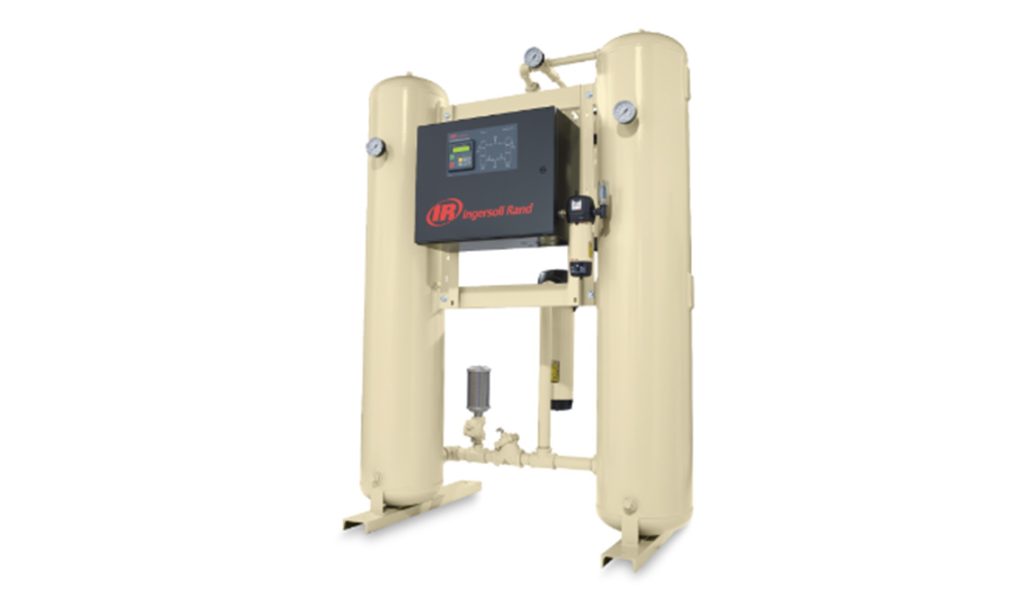
Desiccant air dryer systems play a crucial role in providing clean, oil-free, dry compressed air for various industrial applications. This article explores what a desiccant air dryer is, how it works, the different types, and benefits in various applications.
What is a Desiccant Air Dryer?
Desiccant air dryers are compressed air dryers that use hygroscopic materials, called desiccants, to absorb moisture from compressed air. The term “desiccant” refers to substances that effectively remove water vapor from the air through a process known as adsorption, wherein water molecules cling to the surface of the desiccant material. Some examples of desiccant materials include silica gel, activated alumina, and molecular sieves. This technology is essential in compressed air systems where ultra-dry air is crucial, such as in pharmaceuticals, food processing, electronics manufacturing, and various industrial processes. Because, the presence of moisture in compressed air can cause equipment failure, poor product quality, and downtime in industrial processes. Desiccant air dryers address these issues, providing ultra-dry air with a dew point as low as -40°F (-40°C) or even lower in some models, despite the flowrate in cfm. Thus, providing a better dew point than refrigerated air dryers, which are usually around 37°F.
Components Of A Desiccant Air Dryer
Desiccant air dryers consist of several key components that work together with an air compressor to achieve moisture removal. Understanding these components provides insights into how the air drying system functions effectively.
Desiccant Towers
Desiccant towers are cylindrical vessels that house the desiccant material. These towers work in pairs, so are effectively a twin tower, alternating between drying and regenerating modes. While one tower dries compressed air by adsorbing moisture, the other regenerates its desiccant to prepare for the next cycle. This configuration ensures a continuous supply of dry air to pneumatic machinery and industrial processes.
Desiccant Material
The desiccant material is responsible for trapping and holding moisture from compressed air. These materials have a high surface area, strong adsorption properties, and are usually in the form of desiccant beads. Thus, enabling them to reduce air moisture levels to achieve very low dew points in the air line or air piping.
Filtration System for Compressed Air
A typical desiccant air dryer filtration system consists of two types of air filters for effective air treatment, which are a pre-filter and an after-filter. The pre-filter is upstream of the desiccant to remove contaminants like oil, and dirt from the air compressor supply. By preventing impurities from reaching the desiccant, the pre-filter extends its lifespan and ensures the system operates efficiently over time. Downstream of the desiccant, the after-filter captures any fine desiccant dust or particles that may escape from the drying towers. This ensures the delivered air is not only dry but also free from solid contaminants, protecting equipment and processes at the point-of-use.
Blower Purge Air System
The blower purge air system serves to regenerate the desiccant material. In heatless models, a portion of the dried air is redirected to remove moisture from the desiccant. While in heated models, external heaters assist in this process, reducing air loss and improving efficiency.
Pressure Relief Valves for Compressed Air
These valves are safety devices that are able to release compressed air if the system’s pressure exceeds safe operating limits. They prevent potential equipment damage or system failures due to over-pressurization.
Control Valves
Control valves manage the airflow within the system, directing compressed air between the drying and regenerating towers. They are critical for ensuring the seamless switching of functions, hence, enabling continuous operation without interruptions.
Pressure Gauges
Pressure gauges monitor the pressure levels in the system, thus, providing real-time feedback to operators. They help ensure that the system is functioning within specifications and aid in diagnosing potential issues.
Dew Point Monitor for Compressed Air
The dew point monitor measures the dryness of the compressed air, indicating its moisture content. It ensures the system meets the required air quality specifications for specific industrial applications.
Drain Valve
Drain valves automatically or manually remove liquid condensate that may accumulate in the system. Therefore, preventing water from re-entering the airflow or damaging the dryer components.
Timer or PLC Controller
The timer or PLC controller automates the switching of desiccant towers and regeneration cycles. This ensures efficient operation, optimizes energy use, as well as minimizes manual intervention.
Desiccant Air Dryer Working Principle
The air dryer system operates in a continuous cycle with alternating drying and regenerating phases, as the following sections highlight.
Compressed Air Inlet
Moist, compressed air from the system’s compressor enters the desiccant dryer system. This air typically contains water vapor, oil, and other contaminants that require removal to protect downstream equipment and processes. The air is directed into one of the two desiccant chambers for drying.
Adsorption
Inside the active chamber, the compressed air passes through a bed of desiccant material, such as silica gel or activated alumina. The desiccant absorbs water vapor from the air, effectively reducing its dew point. During this phase, the desiccant holds the moisture on its surface, allowing only dry air to exit the chamber.
Regeneration of the Desiccant Material
Once the desiccant in the active drying tower reaches its saturation point, the process switches to the second tower. The saturated desiccant in the first tower is then regenerated. This is generally achieved by reducing the pressure and introducing a small airflow of dry or heated air, which helps release the trapped moisture from the desiccant material.
The regeneration process varies depending on the type of desiccant dryer. For example, heatless dryers rely solely on purge air for regeneration. While heated dryers use an external heat source like a blower purge to increase the efficiency of the process.
Cycle Switching
The system alternates between the two chambers at regular intervals or on the basis of variables such as dew point levels. This cycle switching ensures continuous operation, thus, allowing one chamber to dry the air while the other regenerates.
Automated control systems or programmable logic controllers (PLCs) can manage this process rather than the manual option. Thereby, optimizing efficiency and minimizing energy consumption.
Air Dryer Types
Desiccant air dryers come in two primary types based on their regeneration methods: heatless and heated. Each type is designed to cater to specific industrial requirements and operational conditions.
Heatless Desiccant Air Dryers for Compressed Air
Heatless desiccant air dryers are the simplest and most reliable types. These dryers regenerate the desiccant material without using external heat. Therefore, relying on a portion of the dried compressed air, or purge air, to remove moisture from the desiccant.
Although effective, this process can consume up to 15% of the total compressed air, making it less energy-efficient. Heatless dryers are best suited for smaller systems or applications where simplicity and reliability are more critical than air consumption efficiency. They are often used in remote or low-capacity operations where external power sources for heating are unavailable.
Heated Desiccant Air Dryers for Compressed Air
Heated desiccant air dryers use external heat to regenerate the desiccant material, significantly reducing the need for purge air.
Variants of heated dryers include heater blower regeneration, where an external blower and heater pass hot air through the desiccant. There is also heater purge regeneration, which combines external heat with a small amount of purge air.
Heated dryers are more energy-efficient than heatless models and are ideal for high-capacity operations or energy-conscious industries. However, they require access to external power and systems, making them more complex. This system is ideal when energy savings is a priority.
Benefits Of Desiccant Air Dryers to Compressed Air
Desiccant air dryers offer numerous advantages that make them essential in a variety of industrial and commercial settings. Here are some of the key benefits:
- Prevents Equipment Damage: Removes moisture to prevent corrosion, rust, as well as damage to pipelines, valves, and machinery.
- Improves Process Efficiency: Provides ultra-dry air with low dew points, hence, ensuring smooth operation in moisture-sensitive processes.
- Protects End Products: Prevents contamination in industries like food, pharmaceuticals, and electronics by providing clean, dry air.
- Reduces Maintenance Costs: Minimizes the need for repairs and replacements by preventing moisture-related damage to compressed air equipment.
- Increases System Reliability: Ensures consistent air quality, thereby reducing downtime and also enhancing operational continuity.
Compressed Air Dryers at Dynamic Rentals
At Dynamic Rentals, we offer an array of air dryers, compressors, and other supporting products both for sale and rental. Contact us today for more details.


