In a refinery’s Fluid Catalytic Cracking Unit (FCCU), the performance of air-moving equipment can make or break operational uptime. Compressors and blowers play a vital role in catalyst regeneration, reactor operation, and emissions control. Whether during planned maintenance, emergency failures, or system upgrades, having reliable rental solutions on standby is essential.
This article examines the role of compressors and blowers in FCCUs, highlighting their critical importance to refinery performance, and how Dynamic Rental Solutions supports petrochemical operations with high-capacity rental units specifically designed for harsh environments.
What Is an FCCU?
The Fluid Catalytic Cracking Unit, also referred to as the “heart” of the refinery’s conversion units, is a key element in petroleum processing. Its purpose is to transform heavy hydrocarbons, such as vacuum gas oil (VGO) and residuum, into lighter, high-value products like gasoline, diesel, LPG, and petrochemical feedstocks like propylene. This makes it one of the most economically important units in refining, directly influencing profitability and product slate flexibility.
Because the FCCU is highly energy-intensive, it relies on careful management of temperature, pressure, and airflow to balance reactor yields with regenerator heat recovery. Even small deviations in airflow can upset combustion balance. Hence, leading to incomplete coke burn, excess CO in the flue gas, or poor product selectivity. For this reason, air equipment, including blowers and compressors, is critical rotating machinery for FCCU uptime.
The FCCU Operating Process
The process operates as a continuous loop with three interconnected sections:
- Reactor: Hydrocarbon feedstock contacts hot, finely powdered catalyst around 500 °C inside the reactor. The catalyst promotes cracking reactions that break heavy molecules into lighter fractions, thus leading to the formation of gasoline and olefins.
- Regenerator: Spent catalyst leaves the reactor coated with coke, a carbon-rich byproduct. To restore catalyst activity, air is injected into the regenerator, where the coke burns off. This combustion not only regenerates the catalyst but also produces the heat needed to drive the endothermic cracking reactions in the reactor.
- Fractionator: The cracked vapor mixture is sent to a distillation column, where products are separated into usable streams such as LPG, gasoline, light cycle oil, and heavy cycle oil.
Several auxiliary systems also support this loop. These include flue gas handling systems, where induced draft (ID) fans move combustion products to boilers or scrubbers. It is also possible to send the combustion products to instrumentation systems, where compressed air powers pneumatic valves and controls.
The Role of Compressors and Blowers in FCCU Systems
While catalysts and cracking chemistry usually get most of the attention, the entire loop depends on a stable air supply and gas handling. Compressors and blowers are the enablers; they control combustion, pressure balance, emissions routing, and instrument reliability. Their failure, even for a short period, can compromise both safety and profitability.
FCCU Overview
In FCCUs, air systems serve three overarching purposes. These include functions such as maintaining catalyst circulation, controlling combustion and flue gas quality, and powering the instrumentation that safeguards the process. Each of these roles requires specific equipment types designed for different flow, pressure, and purity demands.
Beyond day-to-day operation, compressors and blowers also play a critical role in operational flexibility. During startups, shutdowns, or process transitions, temporary fluctuations in air demand require quick stabilization. Rental systems often serve as the buffer, thus ensuring that no single point of failure can force a refinery to reduce throughput or flare products unnecessarily.
These machines must also withstand extreme conditions: high-temperature air streams, particulate-laden gas, corrosive environments, and fluctuating ambient conditions.
For this reason, the design of refinery-grade blowers and compressors includes the following:
- Heavy-duty bearings and seals to handle abrasive catalyst dust.
- Variable speed controls for precise flow adjustment.
- Explosion-proof motors to meet hazardous area requirements.
- Integrated filtration and drying systems for clean, instrument-grade compressed air.
Where Air Equipment Is Necessary
Simply put, precise airflow management is mission-critical. Too little air leads to incomplete combustion, excessive CO, and unstable regenerator temperatures. Whereas, too much air may result in catalyst attrition, erosion, and thermal runaway.
Air-moving equipment supports multiple functions inside the FCCU:
- Regenerator Air Supply: Blowers and compressors deliver oxygen-rich combustion air to burn coke off spent catalyst. Typically managed by centrifugal or axial blowers, often equipped with variable inlet guide vanes or VFD drives for precise flow control.
- Flue Gas Handling: Induced Draft (ID) fans maintain flue gas movement from the regenerator to downstream CO boilers and scrubbers. A proper draft prevents pressure imbalances that could cause catalyst carryover.
- Instrumentation and Process Control: Dry, oil-free compressed air is necessary for pneumatic valves, actuators, and analyzers. This is because even minor contamination can cause actuator sticking or false readings.
- Startups and Purges: High-pressure compressed air is ideal for line purging, inerting, and supporting initial reactor/regenerator heating.
Common Equipment Types in FCCU Air Systems
Here are the most common equipment types in FCCU air systems:
Blowers
Blowers are ideal for moving very high volumes of air at relatively low pressure, hence making them indispensable for FCCU flue gas and combustion air applications:
- Axial Fans: Deliver exceptionally high flow rates at low differential pressures. Moreover, they are common in induced draft (ID) systems handling flue gases; they are compact, efficient, and capable of continuous operation.
- Centrifugal Blowers: Generate higher static pressure and are suitable for combustion air service in regenerators. Their ability to provide steady pressure under varying loads makes them essential in maintaining coke burn rates.
Both blower types have reinforced housings, corrosion-resistant coatings, and variable frequency drive (VFD) capability to allow precise airflow control under dynamic refinery conditions.
Compressors
Compressors provide higher-pressure, lower-flow service, often for instrumentation, purging, and pneumatic operations:
- Rotary Screw Compressors: Known for their reliability and continuous-duty rating, these machines supply consistent compressed air for tools, actuators, and control valves.
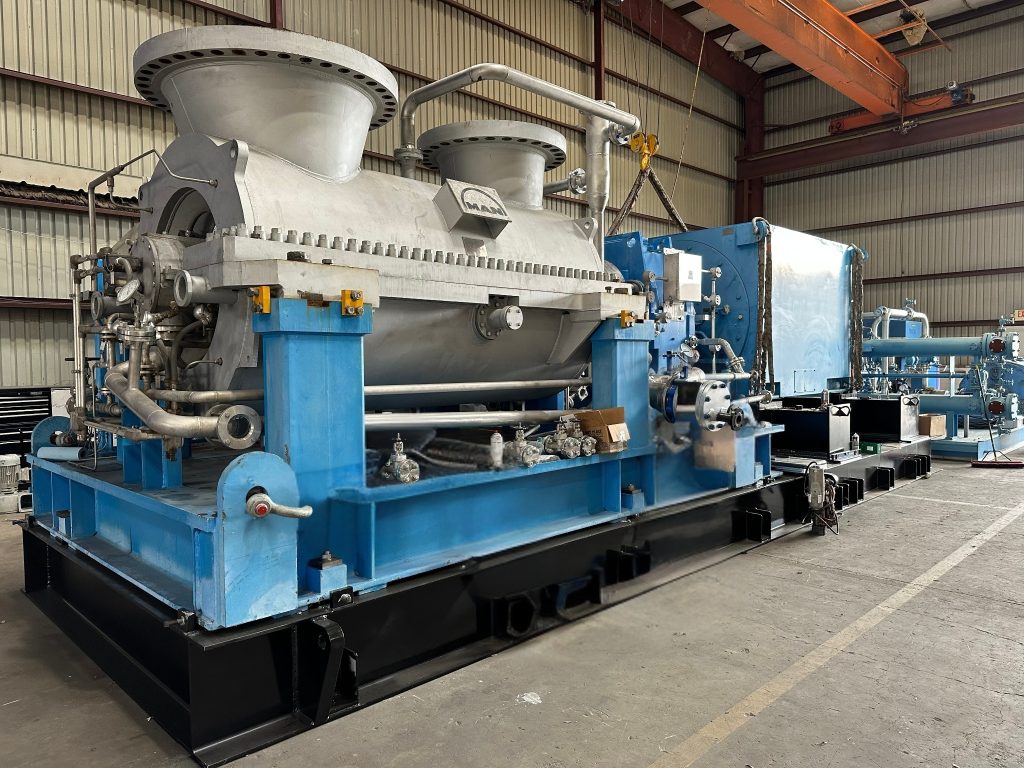
- Centrifugal Compressors: Handle massive volumes of process air where pressure requirements get up to 150 psig. Their multi-stage impeller design is well-suited for refinery duty cycles.
- Oil-Free Compressors: Eliminate the risk of hydrocarbon or lubricant contamination, which is critical in environments where even trace contaminants can deactivate catalysts or damage analyzers.
Key Specifications for Refinery Air Systems
Selecting or renting air-moving equipment for FCCU duty requires attention to a few core parameters that determine safe and reliable service. In practice, these parameters are interconnected. Flow and pressure affect cooling and filtration needs, while compliance requirements dictate electrical design.
- Flow Rates: From 500 to 20,000+ CFM, depending on whether the service is instrument air or combustion duty. High volume is essential for catalyst fluidization and coke burn-off.
- Discharge Pressures: Compressors can reach 150 psi, while blowers typically operate at 10–20 inches WG. Proper sizing avoids incomplete combustion or wasted energy.
- Safety Compliance: Hazardous-area requirements such as Class I Div 2, NEMA 7 enclosures, and explosion-proof motors are standard for refinery duty.
- Deployment Flexibility: Options include skid- or trailer-mounted packages with quick-connect ducting for turnaround or emergency use.
- Additional Features: Items like silencers, filtration, aftercoolers, and VFDs improve efficiency, reduce noise, and protect downstream systems.
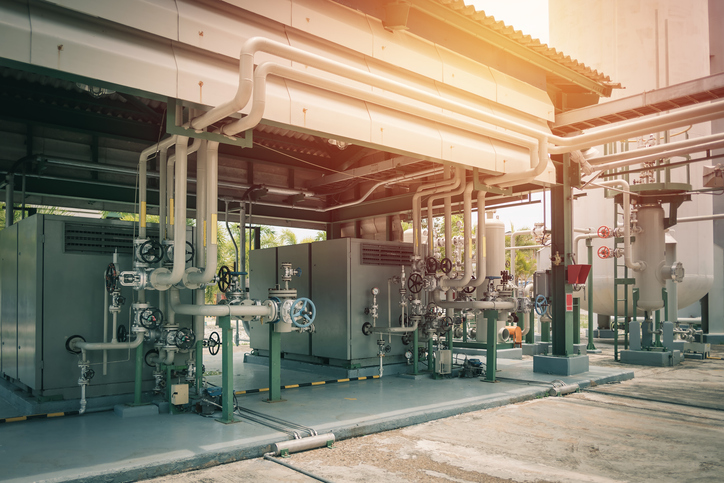
Dynamic Rental Solutions provides equipment engineered to integrate seamlessly with FCCU piping, ducting, and control systems. Packages include silencers, filtration, and ductwork designed for refinery standards.
When to Rent Compressors and Blowers for an FCCU
Renting refinery air systems for FCCU makes sense in the following conditions:
FCCU Turnarounds
Planned outages can last from days to weeks, requiring temporary systems to maintain reliability:
- Backup blowers keep catalyst regeneration balanced during staged maintenance.
- Temporary compressors supply pneumatic tools, purge air, and inerting systems when paired with N2 Generators.
Emergency Backup
A sudden blower or compressor failure can shut down regenerator operation within minutes. DRS responds with:
- Pre-tested rental blowers and compressors designed for refinery duty.
- Rapid dispatch to minimize costly downtime.
Debottlenecking and Supplemental Capacity
Temporary rental systems can also support production improvements:
- Augmenting existing blowers between overhauls.
- Bypassing aging or undersized permanent equipment.
- Enabling throughput trials without permanent CAPEX.
New Unit Commissioning
During FCCU commissioning or expansions, air systems are needed for:
- Purging and leak testing.
- Valve actuation and pneumatic startup checks.
- Functional testing of control systems.
Renting avoids tying up capital on permanent systems that are only necessary for short commissioning periods. With 24/7 dispatch and refinery-grade fleets, Dynamic Rental Services ensures continuity of FCCU operations across all scenarios.
Technical Requirements and Sizing Considerations for Compressors and Blowers
It is necessary to account for process conditions when designing air equipment. Undersizing risks process instability, while oversizing wastes energy and increases wear.
Operating Flow & Pressure of Compressors and Blowers
Airflow and pressure requirements form the foundation of equipment selection. Blowers are typically rated in cubic feet per minute (CFM) and inches of water column (WC), with ratings usually between 70,000 and 200,000 CFM at 30 to 50 psig.
Compressors, on the other hand, are sized in both CFM and pounds per square inch gauge (psig), as refinery instrument air normally requires a stable 90–120 psig supply. Even short-term fluctuations can cause incomplete coke burn-off or CO spikes, underscoring the need for properly matched rentals.
Air Quality
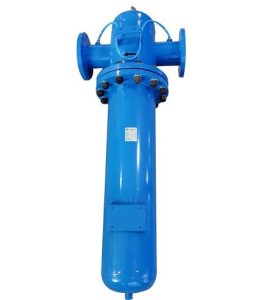
Instrument and purge air must meet ISA 7.0.01 standards, remaining clean, oil-free, and moisture-free. To achieve this, rental units often integrate desiccant or refrigerated dryers along with coalescing filters.
Maintaining dew points below -40 °C prevents valve sticking, instrument drift, and catalyst contamination. DRS provides dryers, coalescing filters, and particulate filtration as part of packaged solutions.
Ambient Conditions
Ambient conditions in refineries can vary dramatically, ranging from desert heat to coastal humidity. Rental packages are therefore specified with weatherproof housings, corrosion-resistant coatings, and NEMA 4/7 enclosures to ensure durability.
Environmental stress testing is standard to confirm suitability for continuous outdoor service.
Power and Fuel
Electric-driven systems are preferred where grid stability is assured. While diesel-driven skids negatively impact refinery emissions but are available when electrical power is limited
Proper Sizing and Environmental Matching of Compressors and Blowers
Finally, engineering calculations underpin the entire selection process. DRS experts work with Refinery engineers to ensure proper sizing and assist with MOC as well as HAZOP activities for a seamless integration of temporary systems. Load balancing with existing utilities is checked to prevent nuisance trips or power quality issues.
By combining these sizing practices with refinery-grade design, DRS ensures each rental package aligns with process demand, site conditions, and safety margins.
Safety and Compliance in Refinery Applications
Air systems in FCCUs must meet stringent safety and environmental requirements. DRS rental equipment is configured for refinery compliance, including:
- Class I Div 2 and NEMA 7 hazardous-area certifications ensure safe deployment near flammable hydrocarbons.
- Explosion-proof motors, starters, and junction boxes mitigate ignition risk in classified zones.
- Noise-attenuated enclosures and silencing packages meet OSHA, API 618/619 noise guidelines, and local environmental requirements.
- Emission-free electric drive options support sustainability initiatives, enclosed-space use, and compliance with refinery greenhouse gas programs.
- Grounding and bonding provisions are included to prevent static discharge in volatile atmospheres.
- Fire-resistant cabling, spark arrestors, and intrinsically safe controls further improve safety margins.
All units undergo pre-dispatch testing, inspection, and certification to guarantee readiness for refinery duty.
Why Rent from Dynamic Rental Solutions
When downtime, maintenance, or unplanned failures threaten FCCU reliability, the right rental partner makes all the difference. Dynamic Rental Solutions provides refinery-ready air systems designed to integrate seamlessly into FCCU operations.
- Quick deployment: Ready-to-run equipment can be shipped immediately from regional hubs to minimize production losses.
- Refinery-grade units: Explosion-proof, weather-rated, and process-ready systems built to withstand continuous FCCU service.
- Engineering support: Load calculations, airflow modeling, and system design handled by refinery-experienced SME’s..
- Turnkey packages: Complete rental solutions including compressors, blowers, ducting, dryers, silencers, and fuel or power management.
- 24/7 support: Field technicians available around the clock for startup, monitoring, and emergency intervention.
Dynamic Rentals understands refinery timing and operational risk and delivers accordingly, ensuring that FCCU operations remain safe, efficient, and compliant under all conditions. Feel free to get in touch for any queries.