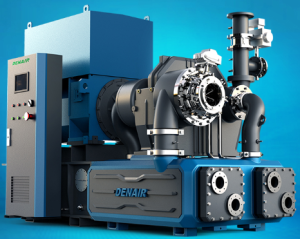

Centrifugal compressors are vital in various industrial systems including HVAC, oil and gas treatment, and power generation systems. Understanding their working principles and components helps to optimize their performance and also select the right compressor for your application. This article reviews a centrifugal air compressor working principle, focusing on energy transfer, the role of the diffuser and volute, as well as selection considerations.
Basic Components of a Centrifugal Air Compressor
A centrifugal air compressor typically consists of five basic components:
- Impeller: The rotating component powered by an external source, which accelerates the gas by imparting kinetic energy to it.
- Diffuser: Located after the impeller, the diffuser slows down the high-velocity gas, converting its kinetic energy into pressure.
- Volute: The volute is a spiral casing that surrounds the diffuser. Moreover, it collects the compressed gas from the diffuser and evenly distributes it into the discharge pipe, ensuring a consistent flow.
- Valves and Nozzles: The suction valve allows gas to enter the compressor. While the discharge nozzle directs the compressed gas to subsequent systems or processes.
- Bearings and Shaft: Bearings support the rotating shaft, connecting the impeller to the power source. This assembly ensures smooth operation and also optimal energy transfer.
These components work together to efficiently compress and move gas within the system.
Energy Transfer and Gas Dynamics in a Centrifugal Air Compressor
The working principle of a centrifugal air compressor centers on energy transfer, primarily from the impeller to the gas. When the motor or turbine powers the rotating shaft, the impeller spins at high speeds, harnessing centrifugal force to draw gas into the compressor. The impeller blades act like a fan, propelling gas particles outward and energizing them.
As the gas exits the impeller, it enters the diffuser. Here, the increase in pressure occurs. The diffuser’s design allows it to expand gradually, slowing down the gas while converting its kinetic energy into high-pressure energy. This transitional phase is critical as it ensures the efficient delivery of pressurized gas into the system.
Role of Diffuser and Volute
The diffuser and volute play crucial roles in converting the high-velocity gas from the impeller into high-pressure gas, with details in the following sections.
Diffuser Functionality
The diffuser is not just a passive component; it actively manages the gas flow dynamics. Its design influences turbulence reduction and also pressure stabilization. As the gas moves from the impeller to the diffuser, its velocity decreases, which leads to an increase in pressure according to Bernoulli’s principle. The efficient design of the diffuser minimizes flow separation, which is essential for maintaining a consistent output pressure.
Volute Importance
The volute works in tandem with the diffuser to maximize overall efficiency. Once the gas exits the diffuser, the volute collects and further directs the high-pressure gas towards the discharge. The spiral shape of the volute helps ensure an even distribution of gas flow, thus, reducing fluctuations that could potentially hinder performance. This steady flow into the discharge pipe plays a vital role in maintaining system integrity and efficiency.
Performance and Efficiency
Several factors influence the performance of centrifugal compressors.
- Design Considerations: The geometry of impeller blades, diffuser shapes, as well as volute dimensions directly affect the pressure ratio and flow rate for the compressor.
- Operating Conditions: Variables like inlet temperature, pressure, and gas composition can significantly impact the efficiency and energy requirements for compression.
- Efficiency Enhancements: Modern designs focus on methods to increase efficiency. Techniques such as intercooling between stages reduce the operational temperature, as a result yielding better overall efficiency.
Common Applications
Centrifugal compressors are indispensable in many industries due to their efficiency and robustness. Key applications include:
- HVAC Systems: These compressors are pivotal in large-scale chillers and air conditioning units, providing reliable and efficient cooling.
- Oil and Gas: In this sector, centrifugal compressors serve critical functions in natural gas processing, compression for transportation, and also refining operations.
- Power Generation: Centrifugal compressors are utilized in gas turbines and compressed air energy storage systems, ensuring optimal efficiency in energy production.
- Petrochemical Industry: They support various processes such as catalytic reforming and chemical synthesis, demonstrating their versatility.
- Fire Suppression Systems: These compressors help provide the necessary air pressure for sprinkler systems in large commercial buildings.
- Aerospace Applications: In jet engines and auxiliary power units, centrifugal compressors compress air effectively, contributing to overall performance.
Maintenance of a Centrifugal Air Compressor
Regular maintenance is vital for ensuring reliable operation and also extending the lifespan of centrifugal compressors. Here are key points to consider:
Inspection Practices
Conduct routine inspections focusing on:
- Impeller Condition: Regularly check for wear or damage, such as cracks or uneven surfaces, that may reduce performance.
- Seal Integrity: Inspect seals for possible leaks, as leaks can lead to significant pressure drops, as well as inefficient operations.
- Bearings: Keep an eye on the bearings for wear or heat-related damage to reduce vibration and also operational failures.
Troubleshooting Common Issues
Even with maintenance, compressors may experience issues. Common problems include:
- Low-Pressure Output: Check for leaks, blockages, or impeller damage that may prevent proper gas flow or pressure.
- Unusual Noises: Noises may indicate misalignment or bearing issues. Maintaining alignment as well as replacing worn bearings can alleviate such problems.
Choosing the Right Centrifugal Air Compressor
Choosing a centrifugal air compressor involves several critical considerations to ensure it meets the specific needs of your application. These considerations can broadly be categorized into technical, operational, and commercial factors.
Technical Considerations
Flow Rate Requirements
Determine the compressed air volume needs, which typically has its measurement in cubic meters per second (m³/s) or cubic feet per minute (CFM). It is crucial to select a compressor that can handle your specific flow requirements without under or over-performing.
Pressure Levels
Establish the necessary pressure levels for your application. This includes understanding the desired pressure ratio, which is the increase in pressure from the inlet to the outlet. The compressor must be able to achieve and maintain these pressure levels efficiently.
Impeller Design
The type of impeller (single-stage or multi-stage) significantly affects performance. Multi-stage compressors are better suited for higher pressure requirements, while single-stage compressors are typically sufficient for lower pressures.
Operational Speed
Consider the operating speed of the compressor, which influences its efficiency and performance. Some applications may require variable speed drives to manage fluctuating demand.
Type of Gas
Identify the gases being compressed. Different gases (e.g., air, natural gas, hydrogen) have unique properties that may dictate the choice of compressor design and material.
Operational Considerations
Maintenance Requirements
Assess the maintenance demands of the compressor. Some designs may require more frequent or specialized maintenance, which can impact total operational costs and downtime.
Noise Levels
Evaluate noise outputs, especially if the compressor will be located near residential areas or in environments where noise control is imperative. Selecting quieter models can be beneficial.
Footprint and Installation Requirements
Consider the physical space available for installation. Some compressors require larger installations than others, which can be a critical factor in facilities with space limitations.
Environmental Conditions
Assess specific environmental factors that may affect the compressor’s operation, such as temperature variations, humidity, and exposure to corrosive substances.
Application Demand Profile
Analyze the demand pattern for compressed air in your application. Applications with variable demand may benefit from compressors designed with flexibility in mind, such as those with variable speed drives.
Commercial Considerations
Total Cost of Ownership (TCO)
Evaluate not only the initial purchase price but also the expected operating costs, maintenance costs, and energy consumption over the compressor’s lifespan. The machine with the lowest TCO is often the best choice.
Budget Constraints
Establish a budget that includes purchase, installation, and maintenance costs. This can help narrow down options efficiently.
Vendor Reliability
Research potential suppliers and consider their reputation, support services, warranty options, and backup supply of parts. A reputable vendor can provide significant long-term benefits.
Purchase or Rental of Compressor
Depending on the project needs, choose which is best between purchasing or renting a compressor. On a long-term project, or when the need is consistent, it may be better to purchase a compressor. But when it is a short-term project or the need is infrequent, compressor rental could prove a better choice.
Centrifugal Air Compressor from Dynamic Rentals
Whether your compressor needs are, Dynamic Rentals is your go-to dealer for renting quality brands. We have an array of air compressors alongside accessories like hose, receiver vessels, manifolds, and aftercoolers. Contact us today for more details.