A sudden increase in production can immediately strain a facility’s compressed air system. Additional shifts, higher equipment utilization, new production lines, or a temporary increase in process demand can push existing compressors beyond their practical operating range. When that happens, facilities do not always need to make a permanent capital investment. A properly sized rental compressor can provide temporary capacity, stabilize plant air pressure, and help maintain production while plant air demand spikes are evaluated or the permanent system is expanded.
Why Production Surges Create Compressed Air Problems
Compressed air demand is rarely constant throughout an industrial plant. Different production areas may consume air at different times, and simultaneous operation of pneumatic equipment can create short periods of much higher demand. A system that performs adequately under normal conditions may struggle when production increases. Additional shifts, increased pneumatic tool usage, new process equipment, or higher utilization of existing machinery can increase peak SCFM requirements. The result can be declining header pressure, increased compressor loading, more frequent cycling, and reduced system reliability. A compressor operating close to its maximum capacity also has less room to accommodate sudden changes in demand. If the facility has little or no spare capacity, even a relatively short production surge can become an operational problem.
How Rental Compressors Help Meet Plant Air Demand
The simplest way to think about a rental compressor is as supplemental compressed air capacity. Instead of replacing the existing system, a rental unit operates alongside the permanent compressors and supplies additional airflow when the plant needs it. This lets the installed equipment handle its normal load while the temporary compressor meets the additional demand.
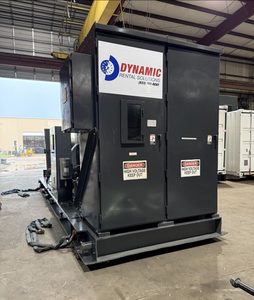
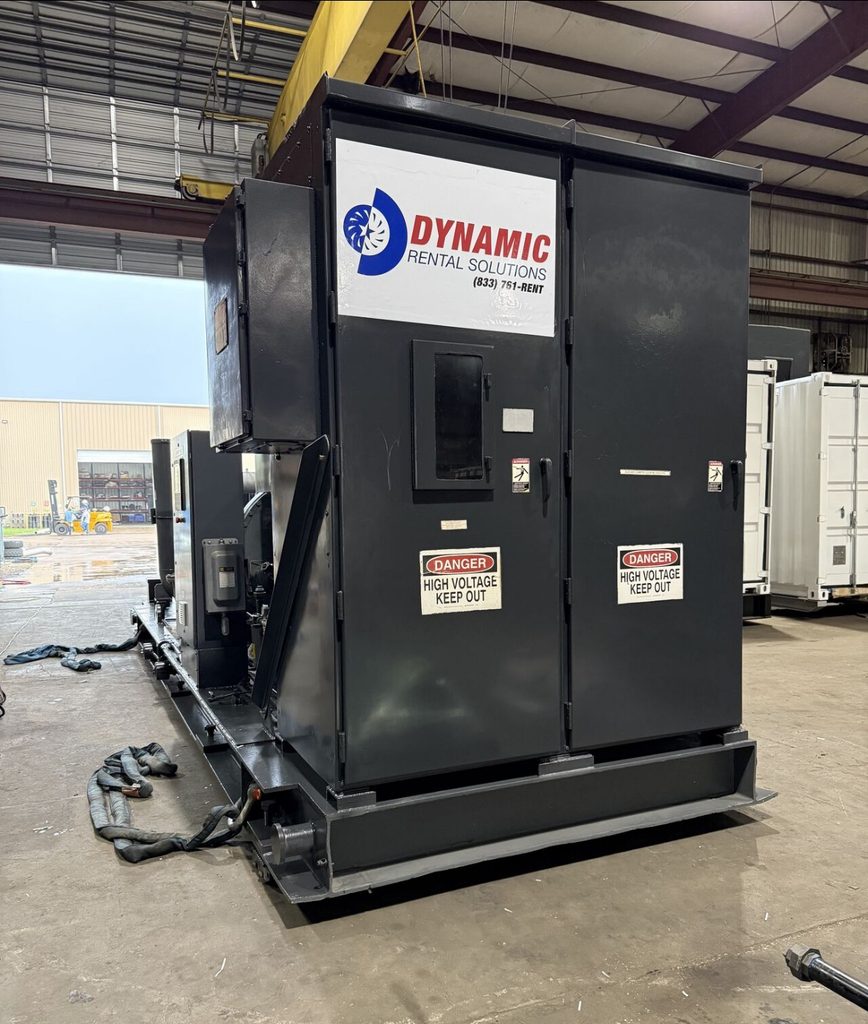
Rental companies provide industrial compressor rentals for increased production, planned maintenance, emergency outages, and situations where facilities want to avoid or delay capital expenditure. Its fleet includes positive-displacement, centrifugal, axial, and high-pressure compressor options, with available airflow capacities ranging from approximately 100 CFM to 70,000 CFM depending on equipment type.
When Should a Facility Consider a Rental Compressor?
A rental compressor can make sense when you need additional compressed air for a defined period rather than as a permanent requirement. Rental equipment can also bridge the gap between current capacity and future needs.
Common situations include:
| Situation | How a Rental Compressor Helps Bridge Plant Air Demand Gaps |
| Temporary production increase | Adds capacity without permanently expanding the compressor room |
| New production line startup | Provides air while long-term demand is evaluated |
| Additional production shifts | Supports higher daily operating hours |
| Seasonal demand increase | Provides capacity during predictable periods of higher consumption |
| Existing compressor near capacity | Reduces the load on permanent equipment |
| Compressor maintenance | Maintains production while equipment is offline |
| CAPEX delays | Provides operational capacity while permanent equipment is being procured |
| Emergency equipment failure | Restores compressed air capacity faster than a permanent replacement |
Rental vs. Purchasing a New Compressor to Meet Plant Air Demand Spikes
A production surge does not automatically justify purchasing another permanent compressor.
The first question should be whether the additional capacity will remain necessary after the current production condition ends. If demand is expected to remain permanently higher, purchasing and installing additional compression capacity may be the appropriate long-term solution. If the increase is temporary, uncertain, seasonal, or related to a specific project, renting can provide greater flexibility.
Rental also gives facilities more time to evaluate actual operating conditions before committing to a permanent system. Instead of sizing a new compressor around assumptions about future production, engineers can use operating data from the temporary installation to better understand the required capacity. This is especially valuable when production plans are changing, or a facility is waiting for a permanent expansion.
How to Size a Rental Compressor for a Production Surge
Don’t select a rental compressor based solely on the additional CFM that seems required. Engineers should evaluate the complete compressed air demand profile, including peak and average SCFM, required operating pressure, simultaneous equipment usage, and environmental conditions.
Determine the Additional Plant Air Demand
Start by establishing the facility’s current demand and identifying how much additional airflow the production increase will require. Peak demand matters because a compressor that meets average consumption may still let pressure drop during high-demand events. The goal is not simply to add the largest compressor available. Oversizing can increase cost and inefficiency, while undersizing may leave the facility with the same pressure instability it was trying to solve.
Confirm Operating Pressure
A compressor rated for a particular CFM at one discharge pressure may deliver a different airflow at another operating condition. Therefore, establish the required pressure before selecting equipment. Also consider pressure losses through hoses, piping, filters, dryers, manifolds, and other temporary components during system design.
Understand the Load Profile
Compressed air demand may change significantly throughout the day. For example, a facility might have moderate consumption during one shift and substantially higher consumption when several production lines operate simultaneously. Understanding when and how demand peaks helps determine whether the facility needs continuous supplemental capacity or a system that can respond to changing loads.
Variable-speed equipment can help in applications where demand changes significantly because compressor output can be adjusted to match operating requirements better.
Air Quality Matters as Much as Capacity
Adding airflow is only part of the solution. The temporary compressed air system must also meet the air-quality requirements of the application. Different processes have different requirements for oil carryover, particulate contamination, and moisture.
Instrument air, pharmaceutical applications, food and beverage processing, and other sensitive processes may require substantially tighter air-quality control than general plant air. Depending on the application, a rental package may therefore require dryers, filtration, aftercoolers, or oil-free compression in addition to the compressor itself.
What Equipment May Be Needed Beyond the Compressor?
A temporary compressed air system is rarely just a compressor placed beside the facility. The appropriate combination depends on the plant’s pressure, airflow, air quality, installation, and environmental requirements. DRS’s rental product range includes compressors from 100 CFM through high-capacity industrial machines, along with dryers, filter skids, manifolds, hoses, and other accessories.
This approach is important because adding compressor capacity without addressing downstream pressure drop, moisture, or filtration can create a different set of problems.
The complete package may include:
- Compressors
- Aftercoolers
- Air dryers
- Filter skids
- Hoses
- Manifolds
- Receiver vessels
- Connections and accessories
Frequently Asked Questions on Plant Air Demand
Here are the most common questions for rental compressors during production surges.
Can a rental compressor support a temporary production increase?
Yes. Rental compressors can provide supplemental compressed air capacity when production demand temporarily exceeds the capacity of the facility’s existing compressors. They can support seasonal demand, additional production shifts, project requirements, maintenance periods, or other short-term capacity increases.
How do I know what size rental compressor I need?
The required compressor based on peak and average airflow demand, operating pressure, simultaneous equipment usage, air-quality requirements, and site conditions. A proper load assessment is preferable to sizing the rental unit from average CFM alone.
Can a rental compressor operate alongside existing plant compressors?
Yes. Temporary compressors are commonly used as supplemental capacity alongside permanent equipment. The system must be properly integrated to account for pressure requirements, connection points, controls, flow, and pressure drop.
Do rental compressors include dryers and filtration?
They can. Depending on the application, a temporary compressed air package may include dryers, filter skids, aftercoolers, manifolds, hoses, and other accessories in addition to the compressor.
Is renting a compressor better than buying one?
It depends on the duration and certainty of the additional demand. Renting can be advantageous for temporary, seasonal, project-based, emergency, or uncertain requirements. Purchasing may make more sense when higher compressed air demand is expected to remain a permanent part of facility operations.
Conclusion: Worry-free Rentals!
Dynamic Rental Solutions provides industrial compressor rentals and supporting equipment for production increases, planned maintenance, emergency requirements, and other temporary applications. Need additional compressed air capacity for a production surge? Contact Dynamic Rental Solutions to discuss your airflow, pressure, air quality, and project requirements, and determine the right temporary compression solution for your facility.