
Compressed air is the production muscle. When the system is clean, dry, right-sized, and stable, the plant runs. When pressure drops, moisture slips through, or capacity comes up short, maintenance teams feel it fast. For facilities that require oil-free compressed air, there is no room for guesswork. Air quality matters. Pressure matters. Response time matters. And when the existing system cannot keep up during a turnaround, outage, production increase, or CAPEX delay, an engineered oil-free compressor rental can keep operations moving without requiring a permanent equipment purchase. Dynamic Rental Solutions supports compressed air system needs during maintenance turnarounds, emergency outages, periods of increased production, and CAPEX delays or avoidance, with a focus on air and temperature-control rental assets to improve performance.
What Is Compressed Air System Performance?
Compressed air system performance is the ability of a facility’s compressed air network to deliver the required flow, pressure, dryness, and air quality at the lowest practical operating risk and cost.
A high-performing compressed air system should:
- Maintain stable pressure at critical points of use
- Deliver enough flow for base load and peak demand
- Provide oil-free air where contamination cannot be tolerated
- Remove moisture through proper drying and filtration
- Minimize leaks, artificial demand, and pressure loss
- Support production during turnarounds, outages, and demand spikes
- Avoid unnecessary equipment ownership when rental support can solve the job
The U.S. Department of Energy has reported that in a typical industrial facility, about 10% of electricity consumption is used to generate compressed air. That is a big enough load to deserve serious attention. But the bigger issue for most operations teams is not just the electric bill. It is whether the air system can keep production moving when demand changes, or equipment falters.
Why Oil-Free Air Changes the Stakes
Not every application can tolerate oil carryover. Food and beverage, pharmaceutical, electronics, coating, chemical, instrumentation, and other sensitive industrial processes may require oil-free compressed air to protect product quality, equipment reliability, and process integrity. Oil-free compressors are designed to deliver compressed air without oil in the compression process, helping reduce the risk of oil contamination in critical applications. DRS’s own oil-free compressor resources point to air purity as a major driver in industries where contamination can compromise product quality and safety.
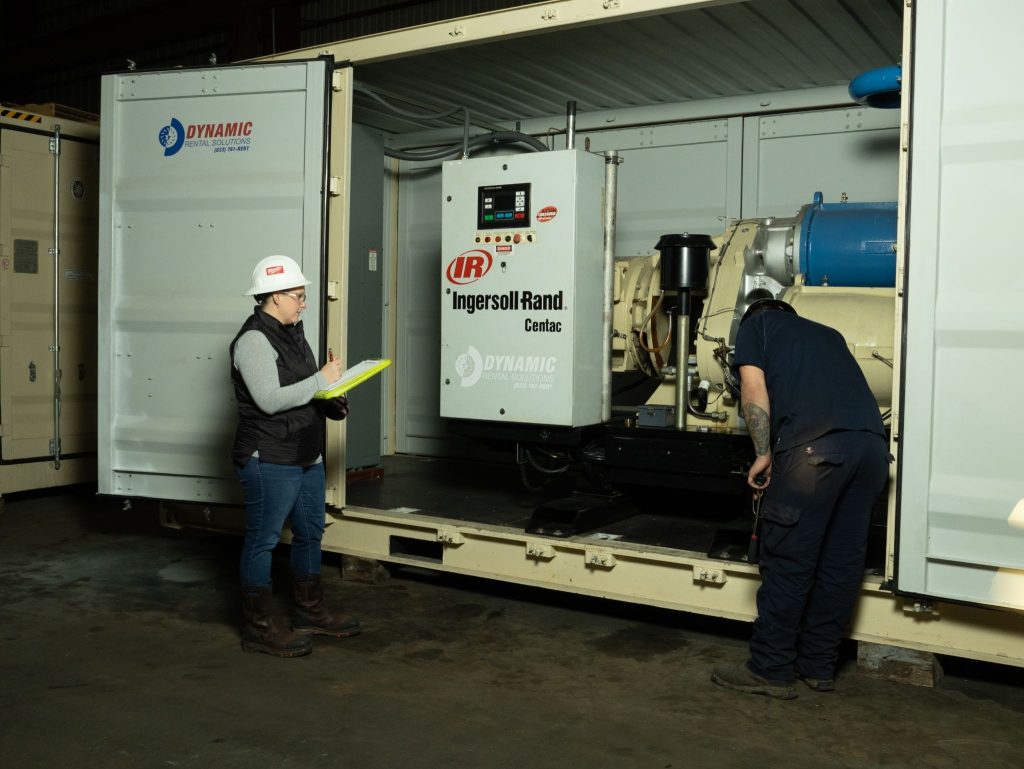
That is why oil-free compressor rental should not be treated like a commodity. The compressor is only part of the answer. The full rental package may include dryers, aftercoolers, filters, hoses, manifolds, cables, and site-specific planning. If the job requires clean, dry, dependable air, the system needs to be engineered from the inlet to the point of use.
Common Causes of Poor Compressed Air System Performance
Most compressed air problems do not come from a single failure. They usually come from a stack of issues that build over time.
Common problems include:
- Leaks that waste capacity and force compressors to run harder.
- Excessive system pressure that creates artificial demand.
- Poor compressor sequencing or outdated controls.
- Undersized or poorly placed air storage.
- Pressure drop across dryers, filters, hoses, or piping.
- Moisture problems from inadequate drying.
- Poor filtration for sensitive applications.
- Undersized capacity during production increases.
- No backup air plan during planned maintenance.
- Emergency outages with no rental strategy in place.
Compressed air leaks are a major problem. The DOE states that leaks can waste 20% to 30% of compressor output and contribute to fluctuating pressure, excess compressor capacity, and increased maintenance due to unnecessary cycling and runtime.
That is not just wasted air. That is paid-for energy, lost capacity, added wear, and another headache for maintenance when the plant is already under pressure.
Start with the Demand Side: Leaks, Misuse, and Artificial Demand
Before adding more air, a facility should understand where the current air is going.
A solid review should look at:
- Required pressure by process
- Flow demand during normal and peak operation
- Known leak points
- Inappropriate compressed air uses
- Pressure drop across the distribution system
- Air demand by shift or production schedule
The DOE recommends identifying pressure and demand profiles before investing in additional controls, while also eliminating inappropriate uses, fixing major leaks, and implementing a leak management program.
This matters because adding compressor capacity to a wasteful system can hide the real problem. More air may get the plant through the day, but it may not improve long-term performance.
Right-Size the Supply Side
The answer is not always “more compressor.” The answer is the right oil-free air package for the job.
Right-sizing means matching the system to the actual requirement:
- Flow
- Pressure
- Air quality
- Dew point
- Runtime
- Redundancy
- Power availability
- Site access
- Footprint
- Hose routing
- Duration of need
This is where oil-free compressor rentals become a practical tool. If the need is temporary, uncertain, urgent, or tied to capital approval, a rental can solve the problem without forcing ownership.
At DRS, emergency response is not a talking point. It is how the work gets done. The team focuses on right-sizing each rental solution, moving fast when the clock is ticking against the customer, and serving as a trusted extension of their operation. That is the mindset industrial buyers need when compressed air is mission-critical: fast response, proper fit, clean execution, and a partner who understands that downtime costs real money.
When Oil-Free Compressor Rentals Make Sense
Oil-free compressor rental makes sense when the plant needs clean compressed air and cannot afford downtime, delay, or unnecessary ownership.
Common use cases include:
- Maintenance turnarounds
- Emergency compressor outages
- Increased production
- Backup during compressor service
- Temporary plant expansions
- Delayed equipment replacement
- CAPEX avoidance
- Seasonal demand
- Process trials
- Quality-sensitive production runs
In these moments, speed and planning matter. The worst time to design a temporary air system is after the plant is already down.
A strong rental plan should answer:
- What flow rate is required?
- What pressure is required at the point of use?
- What is the minimum air quality requirement?
- What dew point is needed?
- Are dryers and filters required?
- Is backup capacity a necessity?
- What power is available?
- Where will the equipment sit?
- How will the hose and cable be routed safely?
- How quickly does the system need to be mobilized?
DRS backs customers with 24/7 support, fast issue resolution, and rental support that keeps the job moving. When industrial compressed air is tied to uptime, response time matters. There is no room for delays, finger-pointing, or half-built solutions. The equipment needs to fit, the service needs to be ready, and the operation needs to keep running. That is not a bonus. That is the job.
Do Not Ignore Dryers, Storage, and Filtration
Oil-free air does not automatically mean dry air. Moisture still has to be managed.
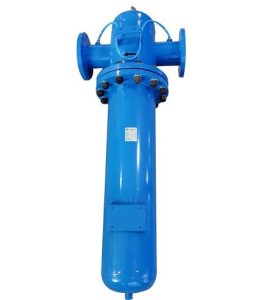
A complete oil-free air rental system may require dryers and filters to protect downstream equipment and product quality. DRS offers dryers and supporting accessories as part of its rental product mix.
Storage also plays a role. Proper air storage can help stabilize pressure during demand swings and reduce unnecessary cycling. Wet storage is typically placed before dryers, while dry storage is placed after dryers to support clean, dry air closer to critical use points. For sensitive applications, the system plan should commence from the compressor discharge to the point of use. Compressor, dryer, filter, storage, hose, and manifold all matter.
Final Takeaway
Improving compressed air system performance is not about throwing more horsepower at the problem. It is about delivering the right oil-free air, at the right pressure, with the right supporting equipment, when the plant needs it. For maintenance turnarounds, emergency outages, increased production, and CAPEX delays, oil-free compressor rentals help industrial facilities protect uptime without committing to permanent equipment ownership. If your facility needs clean, dependable compressed air, Dynamic Rental Solutions can help build a right-sized oil-free compressor rental package with the response, support, and field experience to keep the job moving.
Contact Dynamic Rental Solutions to plan an oil-free compressor rental before downtime gets expensive.
FAQs on Improving Compressed Air System Performance
For planned maintenance or turnarounds, rental planning should begin as soon as outage scope, production schedule, and utility requirements are known. Early planning gives the team time to confirm flow, pressure, drying, filtration, power, placement, hose routing, and backup requirements before the work window opens.
Provide required CFM, pressure, air quality requirements, dew point target, rental duration, site location, available power, connection points, hose distance, elevation changes, and whether backup capacity is required. If those numbers are not confirmed, DRS can help work through the requirements.
Yes. Oil-free compressor rentals are commonly used when production demand temporarily exceeds existing compressed air capacity. This can help a facility meet production goals without rushing into a permanent purchase.
Yes. If capital approval is delayed but the plant still needs air, rental can bridge the gap. It allows the facility to maintain operation while avoiding immediate ownership of permanent equipment.
An oil-free compressor rental is built for applications where oil contamination cannot be tolerated. These jobs often require more attention to air quality, drying, filtration, system layout, and point-of-use requirements.