
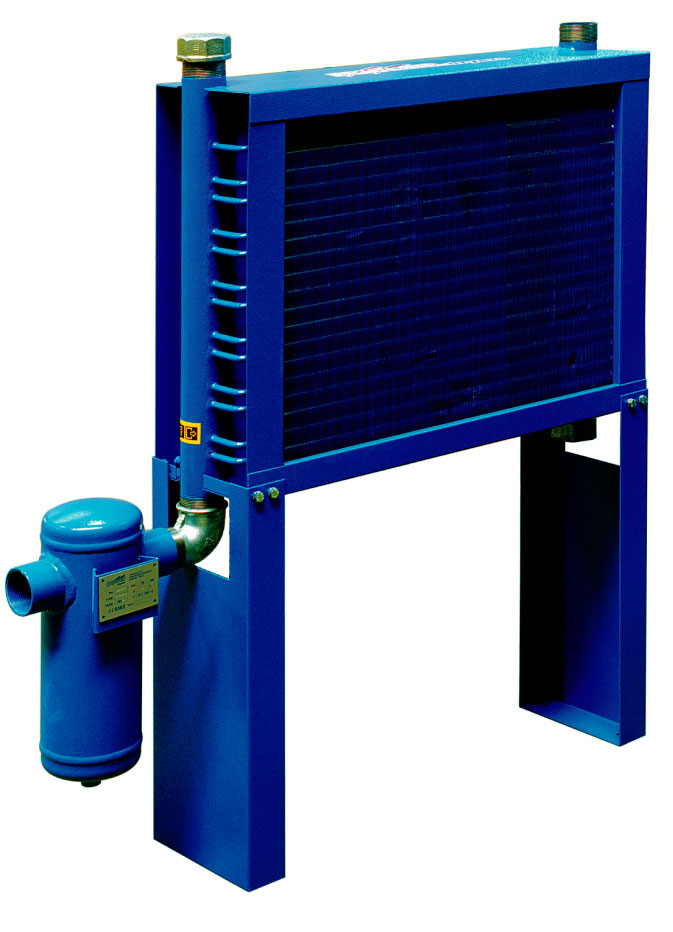
Regular aftercooler maintenance is essential to ensure air compressors operate efficiently and reliably. This guide will explain how aftercoolers work, common maintenance challenges, step-by-step cleaning procedures, signs of wear or failure, and best practices to extend aftercooler life. Whether you’re running a small shop or a large industrial system, learn how proper maintenance prevents moisture buildup, protects downstream equipment, and preserves performance.
What Is an Aftercooler?
An aftercooler is a heat exchanger that removes excess heat from compressed air exiting the compressor. This cooling process also condenses and removes water vapor, making the air suitable for downstream equipment and improving system reliability. Therefore, lower moisture content helps prevent corrosion, improves energy efficiency, and extends the life of pneumatic components.
There are two primary types: air-cooled and water-cooled aftercoolers. Air-cooled versions rely on ambient air and finned tubes to dissipate heat. On the other hand, water-cooled systems use circulating water in a shell-and-tube setup for more effective thermal exchange.
Regardless of the type, the aftercooler’s position immediately downstream of the compressor is crucial for several reasons. These reasons include reducing air temperature, minimizing water content, and protecting components such as dryers, valves, and actuators.
Why Aftercooler Maintenance Matters
Aftercoolers are constantly exposed to high temperatures, contaminants, and operational stresses, which can degrade their performance over time. If neglected, fouling and mechanical wear reduce heat transfer efficiency, allowing moisture to reach sensitive downstream components.
Furthermore, routine aftercooler maintenance ensures optimal performance by maintaining effective moisture removal. Hence, protecting pneumatic tools and systems and supporting ISO-compliant air quality. A clean and properly functioning aftercooler also minimizes pressure drop and keeps temperature regulation stable, which contributes to lower operating costs and longer service intervals for the entire air system. Without maintenance, aftercoolers can cause excessive pressure drop, reduce system efficiency, and lead to unplanned downtime.
Common Aftercooler Maintenance Tasks
Maintaining an aftercooler involves multiple tasks, each targeting specific components and potential failure points. Also, routine upkeep extends aftercooler life and ensures it consistently removes heat and moisture as designed.
Here are the most essential tasks:
Visual Inspections
Look for surface corrosion, leaks, and mechanical damage. Air-cooled models require special attention to fan blades, motor alignment, and debris blocking airflow. Loose brackets, vibration marks, or cracked insulation often indicate impending mechanical failure.
Cleaning the Aftercooler Fins and Tubes During Maintenance
Heat exchanger fins and tubes accumulate dust and oil that restrict airflow and thermal transfer. Cleaning should involve low-pressure compressed air or soft brushes to remove debris without bending the fins. For grease or grime, water-based degreasers are ideal. Also, avoid using high-pressure water or caustic chemicals that could damage aluminum or copper surfaces.
Checking Heat Exchanger Performance
Temperature readings at the inlet and outlet of the aftercooler help quantify its cooling efficiency. A declining temperature differential typically points to internal fouling or airflow restriction. Comparing these readings to baseline values or manufacturer data can help determine whether cleaning or repair is necessary.
Restricted air or water flow due to fouling will not only reduce heat exchange but also increase energy costs or cause compressor overheating.
Inspecting Aftercooler for Internal Fouling During Maintenance
Water-cooled aftercoolers are prone to internal scaling and biological growth, especially when using untreated water. Inspections may involve removing end caps or using a borescope. If any buildup inside the tube bundle restricts flow, it should be removed via chemical descaling or mechanical cleaning depending on the manufacturer’s guidelines.
Signs of Aftercooler Problems
Watch out for signs that indicate compromise of aftercooler performance. These include reduced condensate removal, inconsistent air temperatures, and increased pressure drop across the unit. For instance, a pressure drop of more than 3–5 psi across the aftercooler typically indicates a restriction or fouling.
Here are the most common indicators:
- Reduced moisture removal: Water buildup downstream can mean the aftercooler isn’t condensing effectively.
- Elevated or unstable outlet temperature: This could signal fouling, fan failure, or poor airflow.
- Increased system pressure drop: Blockages or internal corrosion can restrict flow.
- Mechanical noise: In air-cooled units, this often points to fan imbalance, motor failure, or bearing wear.
- Visible scaling or corrosion: Particularly in water-cooled units, this suggests internal fouling and reduced thermal transfer.
- Inconsistent dryer or filter performance: Moisture reaching these units can result from inadequate cooling.
- Unexpected shutdowns or alarms: These may be triggered by temperature or pressure fluctuations caused by a failing aftercooler.
Maintenance Frequency and Schedule
A structured maintenance schedule improves uptime and ensures consistent system performance. For example, daily inspections should include monitoring temperature and pressure gauges and checking the drain systems. Weekly routines should involve cleaning air intakes and verifying fan operation. Monthly tasks may require more thorough visual inspections, performance measurements, and water flow checks for water-cooled units.
Annually, a deep inspection is recommended. This may involve full disassembly for mechanical cleaning or flushing of heat exchange surfaces. Thermographic imaging and efficiency testing help determine if more extensive service or part replacement is warranted.
To summarize:
- Daily: Check system pressures, air temperatures, and drain operation.
- Weekly: Perform visual inspections and clean air-cooled fins.
- Monthly: Check for leaks, inspect fan operation, and monitor pressure drop.
- Annually: Deep-clean heat exchangers, calibrate sensors, and replace worn components.
Document findings in a logbook or digital system. This helps identify trends and schedule predictive maintenance more accurately. Follow OEM guidelines for specific intervals.
Best Practices for Extending Aftercooler Life
To maximize the performance and lifespan of a water-cooled aftercooler, regular maintenance and adherence to best practices are essential. This often means that significant measures have to be taken to ensure efficient heat exchange as well as uninterrupted processes.
- Monitor Water Quality: For water-cooled systems, regularly test and treat water to prevent scale and corrosion.
- Fix Leaks Promptly: Even small air or water leaks can reduce cooling performance and introduce contaminants.
- Clean Proactively: Don’t wait for a performance drop. Establish regular cleaning intervals based on usage and environment.
- Ensure Proper Drainage: Moisture separators and auto-drains must be checked regularly to avoid water carryover.
- Follow OEM Guidelines: Always use recommended cleaning agents and procedures. For customized units, consult the manufacturer directly.
When to Repair vs. Replace an Aftercooler
Deciding whether to repair or replace depends on a balance between cost, efficiency, and system compatibility. If your aftercooler shows persistent performance issues despite cleaning, or if you observe corrosion and leakage that cannot be remedied with basic repairs, replacement may be necessary.
As a general rule, if repair costs exceed 50% of a new unit’s price, or if the system is over 10 years old with outdated efficiency, upgrading is the more economical choice. Also, newer air compressors may not pair well with older aftercoolers, leading to suboptimal operation. Replacing may offer long-term savings and improved performance, especially if downtime is critical and system compatibility is reviewed thoroughly.
Aftercoolers at Dynamic Rental Solutions
A well-maintained aftercooler is vital to the health of your compressed air system. Through proactive inspections, scheduled cleanings, and adherence to manufacturer guidelines, facilities can ensure reliable performance, prevent costly breakdowns, and support long-term energy savings. At Dynamic Rental Solutions, we offer an array of aftercoolers to help meet the needs of your facility. Available in various configurations, including shell-and-tube and plate exchangers, our aftercoolers/heat exchangers are suitable for:
- Chemical processing.
- Power plant cooling loops.
- Waste heat recovery.
- HVAC system integrations.
Contact us today for more details and inquiries.


